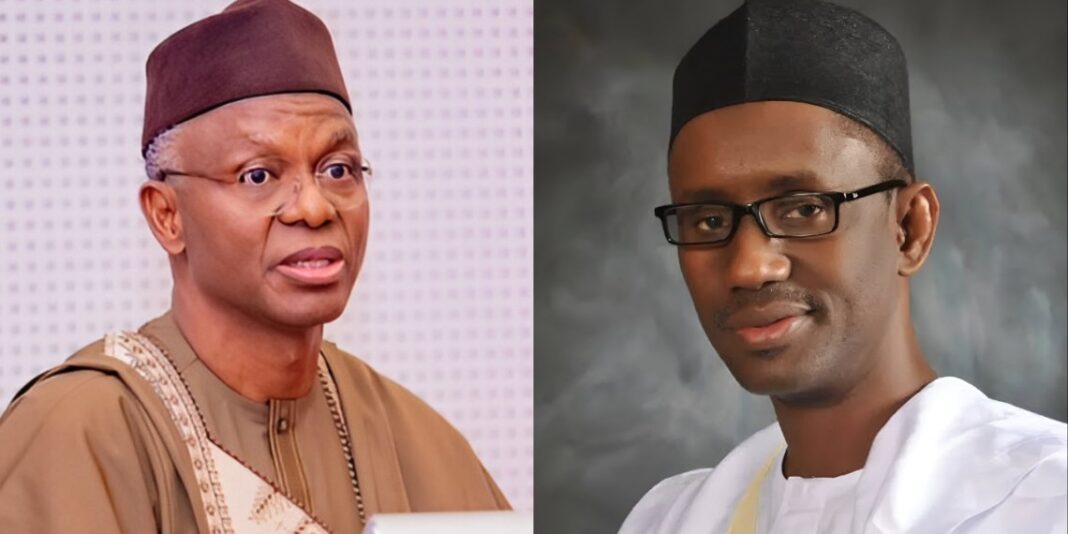
Former Kaduna State Governor, Nasir El-Rufai, was on Wednesday night re-arrested by operatives of the Department of State Services (DSS) minutes after he was released on bail by the Economic and Financial Crimes Commission (EFCC), in a turn of events that bound to heighten political tension in Abuja.
Witnesses said El-Rufai was granted administrative bail at about 8 p.m. at the EFCC headquarters but was immediately taken into custody by DSS operatives who had positioned themselves around the premises.
El-Rufai had been in EFCC custody since Monday over allegations bordering on abuse of office, contract irregularities and diversion of public funds during his tenure as governor of Kaduna State between 2015 and 2023.
Sources familiar with the investigation said the anti-graft agency is reviewing several multi-billion-naira infrastructure contracts awarded under his administration, including urban renewal and transport projects.
While EFCC officials have not released full details of the allegations, insiders suggest the investigation may also involve petitions from political opponents and civil society groups questioning procurement processes and debt accumulation under his government. El-Rufai has not publicly addressed the corruption allegations.
Shortly after his release, the DSS executed a fresh arrest in connection with cybercrime charges already filed against him before the Federal High Court, Abuja.
The case – marked FHC/ABJ/CR/99/2026 – stems from claims made by El-Rufai during a televised interview on Arise TV, where he alleged that the National Security Adviser, Nuhu Ribadu, had ordered security agencies to detain him.
According to court filings, DSS prosecutors allege that El-Rufai admitted to intercepting the NSA’s phone communications and either directly engaged in or had knowledge of unlawful technical surveillance. The agency further claimed that the former governor failed to report the alleged interception and disseminated sensitive security information, thereby compromising national security.
The charges reportedly cite violations of the Cybercrimes (Prohibition, Prevention, etc.) (Amendment) Act, 2024, and the Nigerian Communications Act, 2003.
The cybercrime case followed an incident last week at Nnamdi Azikiwe International Airport, where El-Rufai was briefly stopped by security operatives.
Witnesses said officials temporarily confiscated his international passport amid a heated exchange before he was allowed to leave the airport. Supporters who gathered at the scene reportedly chanted in protest.
In his Arise TV interview, El-Rufai claimed he had prior knowledge of the planned arrest based on intercepted communications allegedly involving the NSA. Security officials have neither confirmed nor denied the specifics of that claim but insist that the matter is now before the court.
The twin actions by the EFCC and DSS have triggered speculation about political undercurrents. Analysts note that El-Rufai, a former prominent figure within the ruling All Progressives Congress (APC), before shifting his allegiance to the African Democratic Congress, has recently been vocal about internal party disagreements and national security matters, potentially widening rifts within Nigeria’s political establishment.
Opposition figures have described the sequence of arrests as politically motivated, while government sources maintain that the actions are strictly law enforcement matters grounded in ongoing investigations.
No date had been fixed for El-Rufai’s arraignment on the cybercrime charges, and neither the DSS nor the EFCC had issued detailed public statements beyond confirming that investigations are ongoing.
