
By Senator Bassey Ewa Henshaw
“Once to every man and nation
Comes the moment to decide
In the strife of truth with falsehood
For the good or evil side
Some great cause, some great decision
Each offering the bloom or blight
And the choice goes by forever
Twixt that darkness and that light”
—James Russell Lowell
And indeed, the INEC Amendment Bill presents such a moment. A moment of great decision. It is the moment when we all must choose between transparency, credibility and trust or manipulation, doubt and suspicion. It is a moment when silence is not golden and we must all speak up and side with the truth.
I was a member of the 5th and 6th Senate of the Federal Republic of Nigeria and was thus privileged to witness and participate in some of the golden moments of the Senate. The defeat of the third term agenda in 2006 was one of such golden moments. Following attempts to amend the Nigerian Constitution to extend the term limit of the president from two to three or even longer and the perceived manipulation and political intimidation that appeared to characterize the move, the Senate under the leadership of Senate President Ken Nnamani voted against and defeated the move.
Another golden moment was when the Senate invoked the Doctrine of Necessity and adopted a resolution which empowered then Vice President Goodluck Jonathan to act as President with authority to discharge full presidential functions when President Musa Yar Adua was incapacitated. The then Attorney General and Minister of Justice had sought to convince the Senate that a Federal High Court in Abuja had ruled that the Vice President was already discharging presidential functions and there was, therefore, no need for any further action.
However, the question arose as to why it was necessary to take the 2009 Supplementary Appropriation Bill abroad for President Yar Adua to sign if Vice President Jonathan was actually already discharging full presidential functions. It became evident that the Senate was not being told the truth.
Hence, under the leadership of Senate President David Mark, the Senate adopted the motion of the Doctrine of Necessity that gave Vice President Jonathan full powers to act.
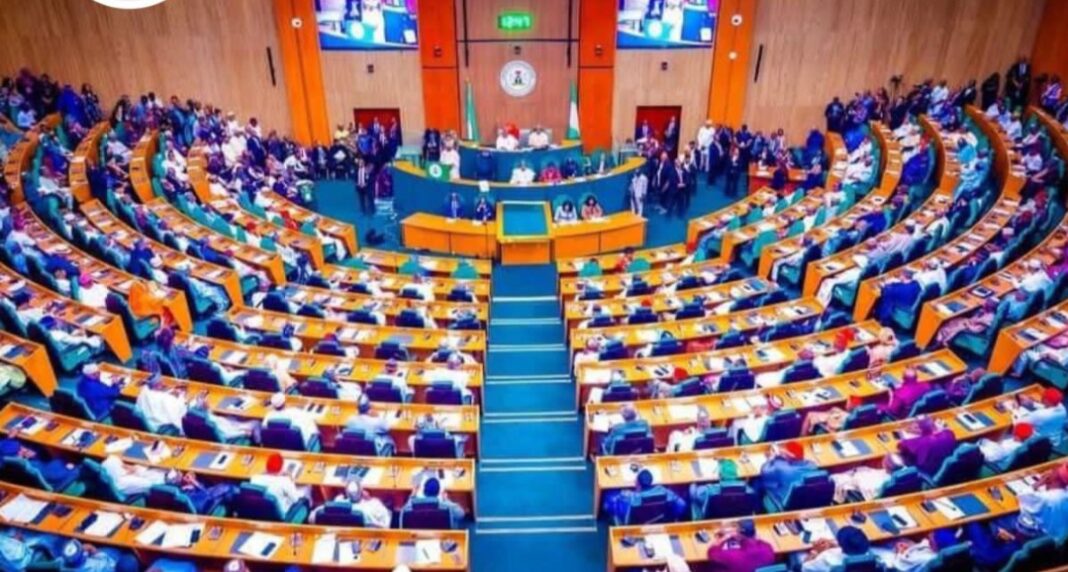
The Senate plays an extremely important and critical role in the protection and development of our democracy. Therefore, it is an institution that must command the trust and respect of the Nigerian people. As one who has spent eight years in the hallowed Red Chambers, I feel an obligation to contribute by speaking out, not to criticize or vilify, but to protect and enhance the image of the Senate.
Last weekend, my brother Distinguished Senator Efiong Bob launched his book, “The Burden of Legislators in Nigeria.” Much of the contents of the book were a catalogue of real life experiences of colleagues who have passed through the crucible of seeking nomination and election into the Legislature, including the Senate.
All who spoke agreed that the burdens legislators have to bear are enormous and assume different forms including imposition of unpopular candidates and the challenge of godfatherism, high expectations and unending personal
demands from constituents as well as a lack of understanding of the job of law making amongst others.
In the course of his remarks during the event, the incumbent Senate President, His Excellency Godswill Akpabio made reference to the controversy surrounding Section 60(3) of the INEC Amendment Bill now before the National Assembly.
The Section seeks to make it mandatory for INEC presiding officers to transmit election results electronically in real time from the polling units directly to the INEC server. The Senate President drew attention to the frequent collapse of our
national grid and the consequent power failures. He also spoke about the lack and/or unreliability of telecommunications networks across the country. Not surprisingly, at the emergency plenary of the Senate held on Tuesday, February 10th, to confirm the votes and proceedings of its earlier session, the Senate affirmed the Senate President’s concerns by attaching a proviso to the clause
requiring electronic transmission of results. The proviso allows for manual collation and the use of Form EC8A in the event of network failure.
The former Senate President, His Excellency David Mark, who was chairman of the book launch did make a simple rebuttal. He said that all that was required of the Senate was to pass the law in accordance with the wishes of the Nigerian people. The question of whether the law could be implemented should be left for INEC to decide. I found it ironic that legislators lamenting the burden they already carry appeared anxious to take on the additional burden of INEC by making arguments for INEC as to whether the law could or could not be implemented. Why does the Senate want to take on the burden of INEC in addition to its own?
There is no gainsaying that the manual collation of election results and the mutilation and manipulation of figures that characterize this process have been at the heart of most controversies and litigation that trail elections in Nigeria.
Nigerians have a deep distrust of manual collation of results because they believe that the process is corrupt and often undermines the wishes of the
people. That is why they are insisting on electronic transmission from the polling units in real time. Therefore, the Senate has a duty to make laws in accordance with the wishes of the people.
It is the responsibility of INEC to ensure that they deliver on their mandate. It is their duty to liase with internet service providers to ensure that services function during the two or three days when elections are conducted. It is their duty to liase with the various power holding companies to ensure power supply. They can invest in Starlink’s internet service, which many have found to provide reliable internet connections around the world. Additionally, Starlink modems can also be moved around. There are numerous options that INEC can explore to ensure they deliver transparent and credible elections. India, with nearly 1 billion voters uses technology to conduct its elections and delivers undisputed results within a day or two of voting. Nigeria’s voting population is less than 10% of India’s. So why can’t our law require INEC to use technology in its entire voting process? In any case, INEC has not raised any concerns about their ability to deliver. On the contrary, they have always assured that they can deliver acceptable election
results using technology.
I believe that the wishes of all Nigerians is to have transparent, credible and acceptable elections. I also believe that Nigerians want the results of voting transmitted electronically from the polling unit to the IREV, INEC’s portal. His Excellency, the Senate President did express confidence about his party’s victory at the 2027 elections. He said that only those who saw defeat starring them in the face were complaining about whether or not voting results should be electronically transmitted in real time. I have no way of challenging this confidence. The only point that can be made is that nothing should be done to taint this expected victory with doubt, suspicion or distrust. The victory will be
sweet if voting is seen to be transparent and credible.
The job of the National Assembly is different from that of INEC. As representatives of the people, the job of the National Assembly is to pass the laws that the people want. It is the job of INEC to conduct elections in accordance with the law. The dichotomy between the two roles is simple and clear enough. I therefore hope that the National Assembly Conference Committee is fully conscious of the wishes of Nigerians and will act accordingly without any provisions or conditionalities.
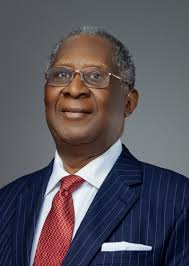
● Henshaw was a Senator in the 5th & 6th National Assembly.
