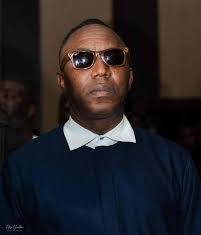
The criminal defamation and cybercrime trial of activist-politician and online publisher Omoyele Sowore opened dramatically on Thursday, January 22, 2026, with a tense courtroom exchange over the defendant’s mobile phone momentarily stealing the spotlight from proceedings.
Sowore is standing trial on charges brought by the Department of State Services (DSS) over an alleged false and inciting social media post in which he referred to President Bola Ahmed Tinubu as a “criminal.” The prosecution says the post threatened public safety and violated provisions of the Cybercrimes (Prohibition, Prevention, etc.) Amendment Act, 2024.
The prosecution’s first witness, Cyril Nosike, an officer attached to the DSS Cyber Space Monitoring Centre, told Justice Mohammed Umar that Sowore’s post generated widespread online tension and complicated the work of security agencies.
Nosike said his unit monitors online platforms around the clock and that on August 26, 2025, he detected a post by Sowore on X (formerly Twitter), in which the defendant reacted to a video of President Tinubu speaking in Brazil. In the post, Sowore described the president as “this criminal @OfficialABAT” and accused him of lying about corruption in Nigeria.
According to the witness, he downloaded the video and saved it on a flash drive, which he later marked as an exhibit. The prosecution tendered the flash drive and a certificate of compliance through lead counsel Akinlolu Kehinde, SAN. Defence counsel Marshall Abubakar said he would reserve his objections, and the court admitted the exhibits.
With the court’s permission, the video was played in open court. It showed President Tinubu addressing Brazilian business leaders, highlighting his administration’s achievements and urging investment in Nigeria, which he described as having a more conducive, corruption-free business environment.
Moments after the video was played, proceedings took an unexpected turn.
Kehinde alerted the court that Sowore, who was standing in the dock, was using his mobile phone while the court was in session. Although Sowore initially attempted to deny the allegation, Justice Umar sternly rebuked the conduct and ordered that the phone be retrieved and handed to his lawyer.
What followed was a brief but charged standoff. Sowore refused to hand the phone to a female court official who approached him, bluntly telling her, “Don’t touch my phone.” He then requested permission to personally hand the device to his lawyer. The judge granted the request, and Sowore stepped out of the dock, walked several metres, and handed the phone to Abubakar. The court directed the defence counsel to place the phone on the table before the bench, restoring calm to the courtroom.
Resuming his testimony, Nosike said he took screenshots of reactions to Sowore’s post and that the DSS formally wrote to X and Meta (Facebook) requesting the takedown of the content, citing rising tension linked to the post. He added that the DSS also wrote to Sowore through his lawyers, demanding a retraction.
Despite the letter being confidential, Nosike told the court that Sowore posted a screenshot of it on Facebook, triggering further reactions that he said were “disparaging to the DSS” and portrayed the agency in a negative light.
“As expected, the letter attracted reactions from Nigerians both far and wide,” Nosike testified.
Copies of the letters and screenshots of online reactions were tendered and admitted as exhibits.
Nosike said such posts place additional strain on security agencies. “We have officers and men who have sworn on oath to put themselves on the line for the security and stability of this country,” he said, adding that inciting online statements make their work more difficult and are taken seriously by the DSS.
At the close of the prosecution’s examination-in-chief, the court invited the defence to cross-examine the witness. Abubakar requested time to study the testimony, a request Kehinde opposed. Justice Umar granted a short adjournment but declined the defence’s request for a February date, fixing January 27 for cross-examination and continuation of hearing.
Earlier in the session, Abubakar had attempted to halt the commencement of trial, alleging that the prosecution failed to serve him with required materials. When presented with proof of service from the court registry, he initially claimed the documents were forged and had conflicting dates. After being reminded that the documents emanated from the court itself, he conceded service and apologised to the court and the prosecution.
With that, the judge ordered the prosecution to proceed—setting the stage for a trial that began with legal arguments but quickly revealed its potential for high courtroom drama.
