
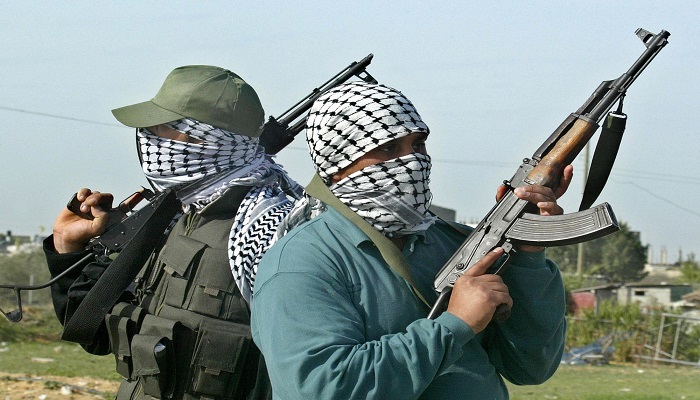
What began as a quiet Sunday of worship on 18 January quickly turned into one of the most traumatic mass abduction incidents in recent Nigerian history. In Kurmin Wali, a rural community in Kajuru Local Government Area of Kaduna State, armed men stormed three churches simultaneously, seized scores of worshippers and marched them into nearby bushes — an attack that has sent shockwaves through the region and strained trust between communities and security forces.
The raid — which eyewitnesses and community leaders describe in harrowing detail — occurred during mid-morning services at an Evangelical Church Winning All (ECWA) congregation and two Cherubim and Seraphim churches. Local sources and church officials now say that as many as 177 worshippers were abducted, although numbers vary slightly between reports.
In the immediate aftermath of the attack, Kaduna State Police Commissioner Alhaji Muhammad Rabiu publicly dismissed claims of a mass kidnapping, describing them as “rumours” and the work of “conflict entrepreneurs” intent on sowing discord. He challenged critics to produce names and details of victims, stating that neither police nor local authorities had found evidence of an attack.

That position changed dramatically within 48 hours. In a Tuesday statement, the Nigeria Police Force reversed course and confirmed that a mass abduction had occurred, acknowledging that many Christians were taken during the coordinated assault. The force’s public relations officer said further verification from ground units and intelligence sources made clear that the kidnappings were real, prompting deployment of tactical and rescue units to the area.
Inspector-General of Police Kayode Egbetokun ordered intensified patrols, search-and-rescue operations, and coordination with other security agencies to locate and safely liberate the victims.
Survivor Accounts Paint a Grim Picture
Among those who survived the ordeal was a worshipper who spoke to journalists wearing a yellow jersey, recounting the moment the attackers struck:
“We were in the church when we heard noise from outside,” he recalled. “I stepped out and saw four armed men. I lifted my little daughter and wanted to run, but one of them said if I run he will shoot me…”
He described how the assailants forced congregants out of the church buildings, herded them together, and marched them into the surrounding forests. The journey was brutal — survivors said they were beaten and pushed through dense bushes. It was only amidst the confusion at another village deep in the forest that the man found an opportunity to escape and return home.
Local Christian leaders, including representatives of the Christian Association of Nigeria (CAN) in northern Nigeria, have insisted the abductions were real and grave in scale, with multiple church communities affected. They released lists of names they say correspond to the victims and have sharply criticised the initial denial by authorities.
Human rights and advocacy organisations also weighed in, noting that efforts to independently verify the situation on the ground were hindered. In at least one account, civil society teams attempting to enter the area were reportedly stopped by military personnel, intensifying concerns over transparency.
The Kajuru abduction is not an isolated incident. Kaduna State — like many parts of central and northwestern Nigeria — has endured repeated attacks by armed groups targeting rural communities, places of worship, markets, and highway travellers. The pattern of violence has fueled widespread fear, prompted migration from vulnerable villages, and drawn international attention to Nigeria’s ongoing security challenges.
Globally, Nigeria has been spotlighted for the frequency of mass kidnappings, with similar attacks on schools, worshippers and travellers prompting condemnation from human rights organisations and foreign governments alike.
For families of the abducted, each day brings new anguish and uncertainty. Some worshippers managed to flee during the initial attack or escape from captivity, but as of the latest reports, the majority remain unaccounted for. Community members continue to plead for swift and effective rescue operations as anxieties deepen over their loved ones’ fate.
As the police and security agencies intensify their search efforts, residents of Kajuru and beyond are left to reckon with the stark reality that, in parts of Nigeria, even houses of worship may no longer be sanctuaries from violence.
What Different Stakeholders Said
Survivors
“They came while prayers were going on. Nobody thought it was possible that armed men would enter the church at that time. When they started shouting, people froze. Some were holding children. Some were crying.”
— Survivor from Kurmin Wali, Kajuru LGA
“They did not separate us by church. They brought everybody together and said we should move. Anyone who slowed down was beaten. We were walking for a long time into the bush.”
— Escaped worshipper, interviewed during police visit
“It was the crowd that saved me. When we reached another settlement inside the forest, there were already many captives there. That confusion gave me the chance to run.”
— Survivor wearing a yellow jersey during police engagement
Church Leaders
“This was not a rumour. It was coordinated. Three churches were attacked at the same time. Families are still missing their fathers, mothers and children.”
— Local church leader, Kajuru
“The pain was made worse by the initial denial. When authorities say it did not happen, it is like telling the victims their suffering does not exist.”
— Senior official, Christian Association of Nigeria (Kaduna chapter)
“Kajuru is 20 minutes from NNPC refinery entrance Kaduna, barely another 10 minutes to Ungwan Rimi GRA where Rimi College is beside. Kaduna State University campus and the residence of the Deputy Governor along Tafawa Balewa Way, inside Kaduna city. Just to understand how easily it can be reached by any security forces in the Kaduna metropolis.
“Yet yesterday, 18th January 2025 170 people were surrounded, selected, and abducted during church service(s) on a Sunday morning in broad daylight where almost everybody in the environment has a cell phone?! There is at least one Police post at Kajuru, to even radio HQ Kaduna, if they are completely unable to engage.
“Kaduna metropolis houses over 15 security agencies/bodies, including the HQ 1 Mechanized Division, Airforce Base with fighter jets & helicopters, and all branches of military & Police intel units. And there is a governor in the same Kaduna metropolis, with GOC, State Police Commissioner, et al? They should stop insulting our intelligence and sensibilities. This is deliberate wickedness.” – Rev. Polycarp Gbaja
Local Officials
“Names were provided. Communities spoke. Survivors returned. What else was needed before action?”
— Kajuru Local Government official
“This incident has damaged trust. People now feel abandoned even when they report attacks.”
— Ward head in affected community
Security Officials
“The police are now fully engaged. Tactical teams have been deployed, and search-and-rescue operations are ongoing.”
— Police spokesperson, Kaduna State Command
“Any suggestion that the police would deliberately ignore a crime of this nature is false. However, verification is critical in a volatile environment.”
— Senior security source
HOW THE KAJURU CHURCH ABDUCTIONS UNFOLDED
Sunday, January 18
• Armed men storm at least three churches in Kajuru LGA during morning worship.
• Worshippers are forced out, regrouped, and marched into surrounding forests.
• Some victims escape during the journey; others remain missing.
• Local communities begin sounding alarms through church networks and community leaders.
Monday, January 19
• Christian leaders and local officials publicly report mass abductions.
• Survivors begin returning to villages with firsthand accounts.
• Social media amplifies the incident under the hashtag #Kajuru177.
Monday, January 19
• Kaduna State Police Commissioner publicly denies that any abduction took place.
• Claims are described as “false,” “politically motivated,” and spread by “conflict entrepreneurs.”
• Public outrage intensifies as families release names of missing worshippers.
Tuesday, January 20
• Under mounting pressure and emerging evidence, police leadership revises its position.
• The Commissioner of Police visits Kajuru, meeting survivors and community leaders.
• Survivors recount events directly to police officials on the ground.
Following Days
• Security agencies deploy search-and-rescue units.
• National and international media pick up the story.
• Civil society groups raise concerns about transparency, accountability, and religious safety.
The Kajuru incident has become more than a kidnapping story—it is now a test of credibility for security agencies and a stark symbol of Nigeria’s worsening rural insecurity. The initial denial, followed by reluctant engagement, has deepened mistrust and reinforced fears that communities under attack may first have to fight for recognition before they can receive protection.
