
By Jeff Godwin Doki Ph.D
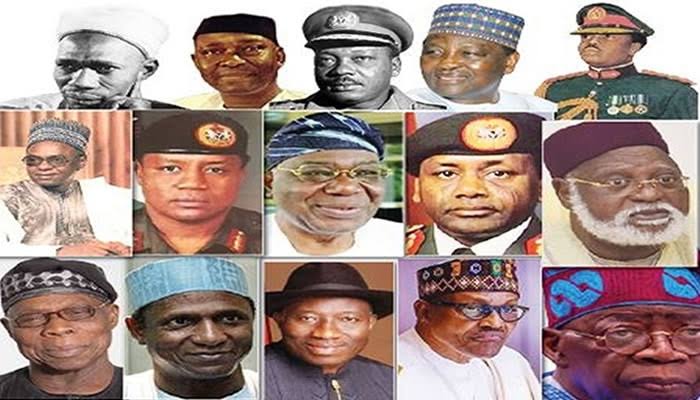
As a country, Nigeria shall be 66 years old come October this year. On January 15, 1966, six years after political independence, the military led by Major Chukwuma Kaduna Nzeogu seized power from the democratically elected government of Alhaji Tafawa Balewa. The reasons the soldiers advanced for the coup were many and varied. Among other things they include: the need to arrest the drifting of the politicians into political violence; to end the corruption which had become pervasive in the country; to end the insecurity consequent upon the clash between Chief Obafemi Awolowo (Action Group) and Chief Akintola (Nigerian National Democratic Party) which eventually led to the declaration of a state of emergency in the Western Region; the disagreement that arose from the result of the National Census of 1962/3; the resort to the use of thugs and election-rigging by the National Council of Nigerian Citizens (NCNC) during the 1965 Federal elections in Western Nigeria and also Tiv area in present day Benue state. It was all these reasons that prompted the first military intervention on January 15, 1966.
For 13 years the military held sway.
Again, in 1983 the military led by Major-General Muhammadu Buhari seized power from the democratically elected government of Alhaji Shehu Shagari citing socio-economic anomie, corruption, bankruptcy, growing external debt and the collapse of social services as reasons. One may state with considerable justification that since independence in 1960, Nigeria has witnessed only two successful coups that dethroned elected governments namely that of Major Nzeogu in 1966 and that of Major Buhari in 1983. While some commentators argue that out of these two coups that of 1966 was more popular because it aimed at arresting the drift into political insecurity at the time, others hold that the Buhari coup of 1983 aimed at sustaining the Hausa control of the government and the country. But let’s reserve that discussion for another time and place.
All students of Nigerian history know that military rule is an aberration because the military has no business in politics and they can only be involved in non-constitutional ways. Lamentably, the military since 1966 has used the gun forcefully to seize power from elected governments. But take note of this: there have been three military coups against military governments. The first was that of July 29, 1966 which led to the death of General Aguiyi Ironsi (an Ibo man) and the emergence of General Yakubu Gowon, the second was that of Gen Murtala Mohammed which overthrew Gen Yakubu Gowon on July 29, 1975. Murtala Mohammed was assassinated by Lt. Col. Bukar Suka Dimka on February, 13, 1976. The third led to the emergence of Gen. Ibrahim Babangida after the overthrow of Gen Buhari in August 1985. But apart from these three coups against military regimes, there have been many unsuccessful ones especially the failed one led by Major Gideon Orkar on April, 22, 1990.
The obvious implication is that the several coups of the military against the military points to only one direction: the desire of the military to wield political power in order to advance their interest as individuals and as a group. The sum of it all is that since independence the military has ruled Nigeria longer than the civilians and this is evident in the coups and counter coups. Needless to state that it is this factor more than anything else which has led to the politicization of the armed forces. It could be perceived that the entire Nigerian nation is trapped not just in a vicious cycle of human stupidity but also in an inescapable web: the politicians used their ill-gotten money to debase the electoral process and wield political power, the soldiers use their guns to seize power from our unconscionable breed of unscrupulous politicians.
More damaging and destructive is the fact that military rule which is anchored on the instruments of coercion and force in the control of states, agencies and resources has caused irremediable harm on the psyche of the entire nation. This has bred a culture of fear, opportunity and sycophancy in Nigerian society. The most critical implication of this forceful control and dominance is the entrenchment of dictatorship in the administration of the country. It was the military regime that introduced the militarization and mismanagement of the economy. It was the first military coup that introduced ethnic inequality in Nigeria. During coups and counter coups, the military group that had more people in the Army wielded uncontrolled powers that give them a sense of superiority over others. The obvious and tragic consequence is that this has given rise to the politicization of governance in Nigeria. Nigeria is a pluralistic society and in such a society when rights are not distributed on the principles of justice, hard work, merit, fair play and excellence, the door is automatically open for ethnic and religious strife which also has the potential of opening a wider door for banditry and terrorism. Furthermore, the military attitude of appointment of officers based on ethnicity and religion and not on competence or merit is one of the problems that has retarded our growth as a nation. It has further entrenched the to-hell-with-merit and man-know-man syndrome. Our students and children are fully aware of this syndrome and it forbodes danger for the nation. It was the military that planted and watered this seed. Now it has germinated and flowered.
Besides, the military especially under Babangida embarked on a systematic program of the pauperization of the ordinary Nigerian citizen through its obnoxious economic reforms in the mid- 1980s. The immediate consequence was that the Gen. Ibrahim Babangida regime accepted foreign Neo-liberal policies which gave rise to heavy external debt burdens, economic stagnation conjoined with rampant inflation, the material impoverishment of educational infrastructure, the massive demoralization of university teachers, skill flight etc. The Babangida regime had zero tolerance for dissenting voices. It proscribed ASUU, arrested, tortured and detained it leaders especially Attahiru Jega and Festus Iyayi. It was the same military under Babangida that annulled the 1993 elections, an election that was adjudged to be very free and fair. And the reasons trumped off for the annulment were so contradictory, so insulting to the intelligence that the entire Nigerian nation seemed to have degenerated into a theater of the absurd. The Nigerian military can be accused of almost all the crimes in the calendar.
The consequence of prolonged military rule is that today, Nigeria beckons on China, UAE, France and many other foreign countries and multinationals to come into the country and make money by exploiting our rich natural resources. Today, Chinese companies are everywhere in Nigeria constructing roads while at the same time carting away our mineral resources and engaging in illegal mining of minerals in states like Nasarawa, Plateau, Adamawa and Zamfara. Besides, the oil in the Southern part of the country is exploited on a daily basis by American and Chinese companies. They exploit all these resources and go free because Nigerian citizens are not united. There is a huge connivance between the rulers and the victims. The Nigerian government has completely abandoned the agro-based sector. All attention is on the oil sector. Apart from oil, our leaders think only about political power because to control political power in Nigeria means to be in charge of the treasury and to be in charge of the treasury means to become a multi billionaire; to set up business ventures in all city capitals of the world. The political class is obsessed with winning the forthcoming 2027 elections, no more, no less.
With the return to civil rule in 1999, Nigerian citizens are yet to cleanse the militaristic cobwebs in their psyche and thinking. For example, Obasanjo and (late) Gen. Buhari who have both ruled Nigeria for eight years each as civilians were all former men of war. They share the unique distinction of being the only two Nigerians (for now) who have ruled Nigeria both as military heads of states and as democratically elected presidents. Both are retired Generals in the Nigerian Army. Both rose to power promising to tackle corruption. Well, we all know the judgement of history over their promises. The uneasy implication is this: what could be more violent than the imposition of military rule with soldiers, guns and jackboots to clamp down on dissenting voices? To fritter away the nation’s resources in the most cynical undertaking that has reduced a potentially great country to beggary and debt? To entrench a culture of ethnic identities that polarize the entire citizenry into tribal cocoons?
Is it a surprise that most civilian regimes in Nigeria are simply a direct offshoot of their military counterparts? What could be more violent in a Democracy than the arbitrarily removal of fuel subsidy and the introduction of new tax reforms whose making you are never part of but which binds your life with an iron grip? Do recall that this is the land built by the military. The military has bred all the civilian dictators in Nigeria. It is left to be said that the military still has the opportunity to redeem its battered image. This it can do by fighting and defeating bandits and terrorists who have turned the lives of Nigerian citizens into their playthings. I nearly forgot to pay deserving tributes to our fallen heroes who fought for and died for our dear country Nigeria. May their souls and that of the faithful departed rest in peace.
● Doki is a Professor of Comparative Literature at the University of Jos (UNIJOS), Nigeria
