
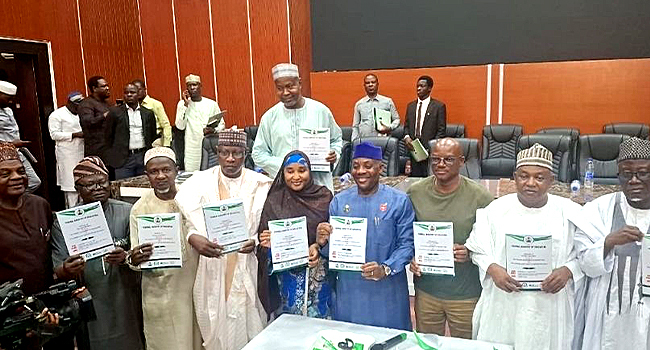
In a historic development that could herald an end to years of recurrent industrial disputes in Nigeria’s public universities, the Federal Government and the Academic Staff Union of Universities (ASUU) formally signed a negotiated agreement on Wednesday, January 14, 2026, bringing to a close a 16-year renegotiation stalemate and resetting the framework for tertiary education in the country.
The agreement marks the culmination of protracted negotiations dating back to 2017 to revise the 2009 FG-ASUU agreement, which had fuelled persistent strikes, disrupted academic calendars and frustrated students, parents, and stakeholders in the education sector. The renegotiation process, which saw multiple committees under successive administrations, finally reached consensus in late December 2025 and was formally signed in Abuja this week.
Some key provisions of the new agreement include a 40 per cent upward review of the emoluments of academic staff in federal universities, approved by the National Salaries, Incomes and Wages Commission, effective January 1, 2026.
Others are:
Rather than simply raising base pay, the new structure comprises two components:
• Consolidated University Academic Staff Salary (CONUASS)
• Consolidated Academic Tools Allowance (CATA)
The CATA — unique to university academics — is designed to support core academic functions such as journal publications, conference attendance, internet access, professional memberships, and book acquisition, a move aimed at enhancing research output and global competitiveness.
▪︎ Earned Academic Allowances (EAA) Restructured: The agreement clearly defines and restructures nine categories of earned academic allowances, tying them transparently to duties performed — including postgraduate supervision, fieldwork, clinical duties, examination roles, and leadership responsibilities — to promote accountability and fairness in remuneration.
▪︎ Professorial Cadre and Special Allowances: In a first for Nigerian universities, the Federal Government introduced a Professorial Cadre Allowance to recognize the additional responsibilities of full professors and readers. Under the new terms:
• Professors will receive approximately ₦1.74 million annually (≈ ₦140,000 monthly)
• Readers will receive about ₦840,000 annually (≈ ₦70,000 monthly)
This allowance is meant to support research coordination, academic documentation and administrative efficiency.
Beyond pay, the renegotiated pact aims to strengthen the integrity of Nigeria’s public universities through reforms targeted at:
• University autonomy and academic freedom
• Improved funding for research, laboratories, libraries, and equipment
• More democratic governance structures, with academic leadership positions such as Deans and Provosts to be filled through election by qualified professors
These measures are considered essential to reversing decades of underfunding and administrative interference that undermined institutional performance.
At the unveiling ceremony in Maitama, Abuja, Education Minister Dr. Tunji Alausa hailed the agreement as a defining moment in the nation’s educational reform agenda, crediting President Bola Ahmed Tinubu with providing the political will necessary to break the longstanding impasse and usher in stability for public universities.
ASUU President Prof. Chris Piwuna described the development as historic and urged lecturers nationwide to resume academic activities, stressing that full implementation by the government is key to preventing future strikes. The union expressed guarded optimism that, if faithfully executed, the agreement could curtail the cycle of incessant industrial action that has characterised Nigeria’s higher education landscape.
Students and their families — long beleaguered by prolonged university closures due to strike action — welcomed the development, with many hoping that the new framework will finally lead to consistent academic calendars, reduced disruptions, and improved quality of education across public universities.
Despite the positive reception, some education commentators caution that effective implementation, sincere funding allocations, and sustained political will will determine whether the agreement finally delivers on its promise to transform Nigeria’s public university system. Critics note that issues of research funding, infrastructure deficits and bureaucratic bottlenecks remain unresolved and require immediate action from both the government and university administrations.
