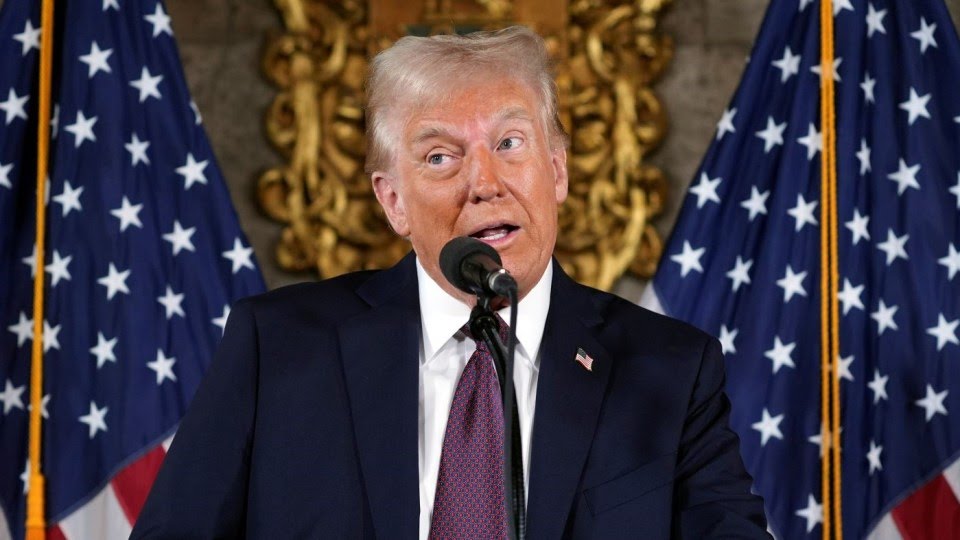
U.S. President Donald Trump has issued a stark warning that the United States could carry out additional military strikes in Nigeria if violent attacks targeting Christian communities persist, according to a Thursday interview published by The New York Times.
His comments come as infighting between factions of the terror groups in the Sambisa Forest area has claimed scores of lives.
In the interview, Trump described last month’s U.S. military operation in northwest Nigeria as potentially the first of several actions. The Christmas Day strikes — conducted in coordination with the Nigerian government — targeted camps of Islamic State–linked militants in Sokoto State. Trump and U.S. officials framed the operation as a response to escalating violence against Christians by extremist groups.
“I’d love to make it a one-time strike,” Trump said. “But if they continue to kill Christians, it will be a many-time strike.”
Trump’s comments appear to build on a narrative he has repeatedly emphasised throughout late 2025, in which he characterised the situation in parts of Nigeria as posing an “existential threat” to Christianity — a claim that has sparked widespread debate among analysts and foreign policy experts.
Meanwhile, scores of fighters were reportedly killed in a week-long surge of violent infighting between rival factions of Boko Haram and the Islamic State West Africa Province (ISWAP) across the Sambisa Forest axis of Borno State.
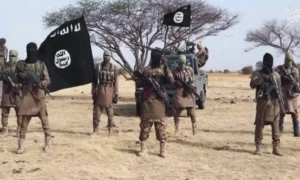
Security sources told Zagazola Makama that the renewed hostilities erupted on Jan. 3, following a coordinated ISWAP raid led by two commanders, identified as Jundullah and Ibn Hataf, targeting camps loyal to the Boko Haram faction around the Ali Ngulde axis of the Mandara Mountains.
The offensive, according to the sources, was met with stiff resistance as Boko Haram elements mounted a counter-ambush under the coordination of a field commander known as Abu-Rijal, also called Ba-Sulhu. Dozens of ISWAP fighters were reportedly killed in the encounter, while many captured alive, with weapons seized by the defending faction.
Footage that resurfaced during the week and said to have been obtained by Zagazola Makama, showed captured ISWAP fighters being executed before other combatants, amid claims of victory by the Boko Haram faction.
While the video reflects the brutality that has characterised inter-group rivalries in the forested enclaves of the Lake Chad in Borno State. Heavy weapons including AK-47 rifles, a general-purpose machine gun (GPMG), an anti-aircraft gun and assorted ammunition, were
recovered during the initial clashes.
However, the balance of power appeared to shift days later. On Jan. 6, ISWAP fighters were said to have launched a retaliatory assault on a Boko Haram stronghold in the Sabil Huda axis, triggering a prolonged exchange of heavy gunfire that lasted several hours.
Sources said ISWAP forces eventually overran the position, killing at least 12 Boko Haram fighters and seizing additional weapons.
The aftermath of the fighting reportedly forced the relocation of Boko Haram families, women and children from contested camps to perceived safe havens around the Yale General axis.
Night operations were also said to have been conducted to track fleeing fighters, though no further confirmed engagements were recorded as of Wednesday.
The renewed clashes are consistent with a long-running rivalry rooted in ideological differences, leadership disputes and competition over territory, resources and fighters. Both factions, according to sources, are re-arming and repositioning for possible further attacks.
Meanwhile, officials in Abuja have firmly rejected the notion that Christians are being systematically targeted or that the Nigerian government is failing to protect religious communities.
A statement from Nigeria’s Ministry of Foreign Affairs said the Christmas operation was part of “ongoing structured security cooperation” with international partners, including the United States, and was aimed at combating terrorism rather than any particular religious group.
President Bola Ahmed Tinubu and Foreign Minister Yusuf Maitama Tuggar have both stressed that Nigeria’s complex security crisis affects communities of all faiths, and that extremist violence by groups such as Boko Haram and the Islamic State West Africa Province (ISWAP) does not discriminate by religion.
On Dec. 25, 2025, the U.S. military, with Nigerian cooperation, launched “powerful and deadly” strikes against Islamic State militants in Sokoto State, according to reports. Trump announced the strikes on his social media platform, framing them as retaliation for extremist attacks that he said had disproportionately harmed Christian communities.
U.S. Africa Command confirmed the strike occurred at the request of Nigerian authorities and targeted militants accused of planning or executing violence in northwest Nigeria, an area plagued by long-running militant activity.
However, analysts and some observers have cautioned that the insecurity afflicting northern and central Nigeria is driven by a mix of insurgency, banditry, communal clashes, and criminal networks, and that both Christians and Muslims have suffered significant losses.
Violence across Nigeria’s north-west and north-east continues to pose a serious threat to civilians and security forces alike. Attacks by insurgent groups — including Boko Haram and ISWAP — have killed and displaced tens of thousands of people over the past decade. Recent incidents, such as deadly ambushes in Borno State and market attacks in Niger State, underscore the ongoing instability.
As international attention focuses on Nigeria, government leaders and security experts are urging a comprehensive approach that combines military, political, and community-based solutions to address the deep-seated causes of violence.
