
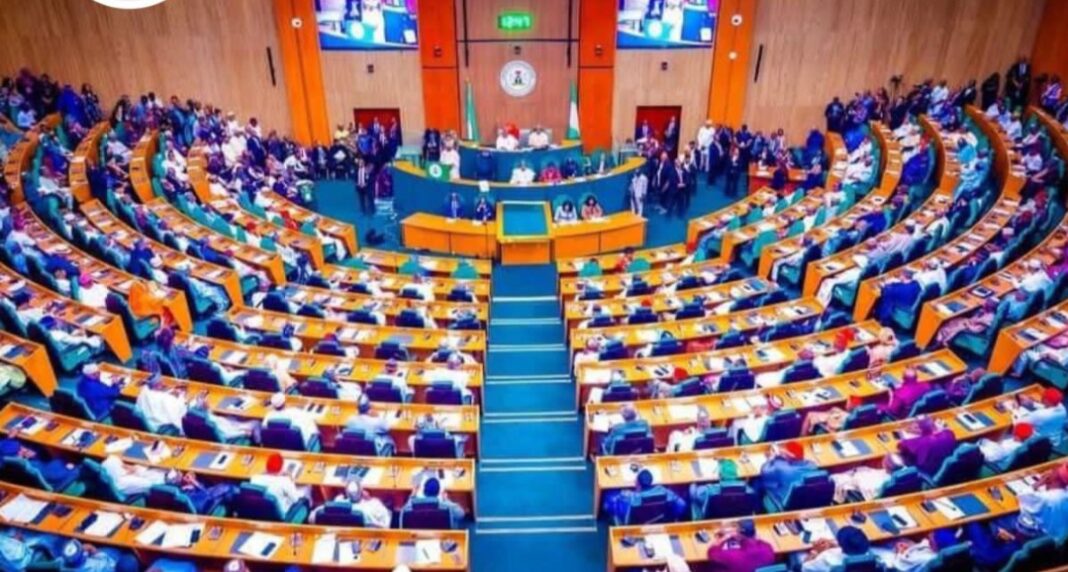
The National Assembly has today formally disowned the versions of four major tax reform laws that were published in the Official Gazette last year, amid mounting public concern that the gazetted copies circulating across the country contained unauthorised alterations not approved by lawmakers.
In an unprecedented move, the legislature has released Certified True Copies (CTCs) of the laws it actually passed and transmitted to President Bola Ahmed Tinubu for assent, underscoring serious doubts about the authenticity of the gazetted texts previously in circulation.
The four Acts at the centre of the dispute — the Nigeria Tax Act, 2025; Nigeria Tax Administration Act, 2025; National Revenue Service (Establishment) Act, 2025; and Joint Revenue Board (Establishment) Act, 2025 — were approved by both chambers of the National Assembly in mid-2025, signed into law by President Tinubu later that year, and gazetted on June 26, 2025. They were scheduled to take effect from January 1, 2026.
The renewed controversy was triggered in December 2025, when Hon. Abdulsamad Dasuki (PDP-Sokoto) raised a matter of privilege in the House of Representatives, asserting that the versions of the tax laws published in the Official Gazette differed materially from the harmonised bills debated and approved by both chambers. According to Dasuki, the discrepancies constituted a breach of legislative rights and a violation of the Constitution.
In response, the leadership of both chambers — Senate President Godswill Akpabio and Speaker Abbas Tajudeen of the House — directed the Clerk to the National Assembly to issue certified copies of the authentic Acts, including the presidential assent pages, and to initiate a re-gazetting process to ensure the public has access to the correct legislative text.
A statement from the House emphasised that the National Assembly is “an institution of records” guided by clearly defined procedures, and that only the certified versions released by the legislature represent the true law enacted by parliament. Members of the public, professionals, institutions, and stakeholders were urged to disregard any other versions in circulation that are not certified by the National Assembly.
Key Discrepancies Addressed in Certified Versions
Preliminary reviews of the certified copies reveal that several contentious differences between the gazetted versions and the Acts as originally passed have been reconciled:
• Currency computation rules for petroleum operations were restored to the lawmakers’ original wording, countering the altered gazette requirement that computations be in U.S. dollars; the certified version confirms assessment “in the currency of transaction.”
• Clauses imposing new conditions on tax appeals — including a controversial requirement to deposit 20 % of disputed amounts before High Court appeals — have been removed.
• Provisions that would have permitted the Nigeria Revenue Service (NRS) to sell movable assets without High Court orders were expunged; the original requirement for a court order was reinstated.
• Powers for the NRS to arrest suspected offenders — introduced in the gazetted text — were not in the National Assembly-approved version, which retains only investigative authority.
• Sections that uphold parliamentary oversight of the NRS — including quarterly and annual reporting to the National Assembly and powers to summon board officials — were restored after being omitted in the gazetted copies.
The dispute has drawn widespread political reactions:
• The Minority Caucus in the House has decried the alleged “fake” versions and urged an immediate suspension of implementation until full clarity is achieved.
• Former Vice President Atiku Abubakar warned that correcting purportedly altered laws through internal administrative directives “sets a dangerous precedent” and could undermine constitutional lawmaking processes, insisting that fresh passage and presidential assent may be required if true alterations occurred.
• Civil society groups such as CITAD have echoed concerns, calling for greater transparency and accountability over the circumstances that allowed conflicting versions to circulate.
At the same time, pressure groups such as The Patriots have backed the National Assembly’s decision to re-gazette the Acts, emphasising that gazetting is an administrative act that cannot override what was duly passed by both chambers.
Despite the legislative storm, the Nigeria Revenue Service (NRS) has maintained that implementation of the new tax regime will continue. NRS Chairman Dr. Zacch Adedeji has dismissed the controversy as politically motivated and as arising from misinformation rather than substantive issues with the law itself. He urged security agencies to remain alert in the face of rumours of planned protests, advising Nigerians to focus on understanding the provisions rather than engaging in mass action.
In a television interview, Adedeji insisted that the tax reforms are being implemented based on the gazetted laws and that the legislative process complied with constitutional requirements, with actual operations beginning after presidential assent in June 2025.
The tax law controversy has deepened Nigeria’s broader debate over governance, transparency, and fiscal reform. President Tinubu’s tax overhaul — described by government officials as a “once-in-a-generation” reset aimed at broadening the tax base and supporting economic stability — was always controversial, drawing opposition from labour unions, political parties, and civil society during its passage.
With the release of the CTCs, the National Assembly seeks to restore public confidence and legal certainty. An ad-hoc committee chaired by Hon. Muktar Aliyu Betara, has been tasked with investigating how the unauthorised versions entered public circulation and recommending safeguards to protect the integrity of the legislative process in future.
As Nigeria navigates the practical rollout of the reformed tax regime in 2026, key questions remain over legal challenges, public buy-in, and the impact of the laws on businesses, workers, and the national economy.
