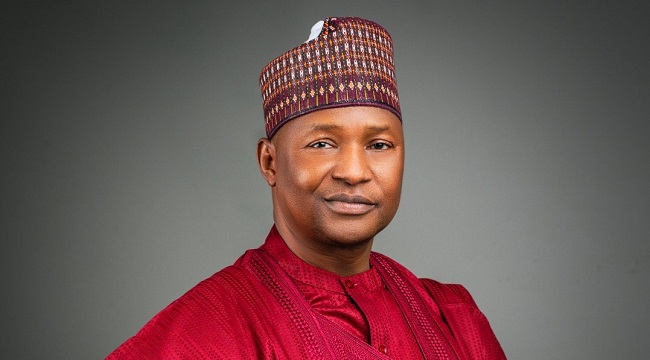
The Economic and Financial Crimes Commission (EFCC) has moved to formally charge former Attorney-General of the Federation and Minister of Justice, Abubakar Malami (SAN), and his son, Abdulaziz Malami, alongside an associate, Hajia Bashir Asabe, with money laundering offences involving billions of naira, in one of the highest-profile anti-graft actions in recent Nigerian history.
The 16-count charge sheet, dated December 23, 2025, was filed at the Federal High Court, Abuja, where the anti-graft agency alleges that the defendants used a network of companies and accounts to launder about ₦9 billion and acquire multiple high-value properties across Abuja, Kebbi, Kano and other locations.
According to the charges, which span transactions from 2015 to 2025, Malami and his co-accused allegedly used entities such as Metropolitan Auto Tech Ltd, Meethaq Hotels Ltd, and Rahamaniyya Properties Ltd to disguise proceeds of unlawful activity by purchasing real estate and holding funds in bank accounts. The assets allegedly traced to Malami include 30 houses and other properties valued at about ₦212.8 billion.
The EFCC claims its investigation uncovered multiple specific transactions, including:
• Concealing over ₦1 billion in a Sterling Bank account via Metropolitan Auto Tech between July 2022 and June 2025.
• Laundering ₦600 million and using it as collateral for a loan to Rayhaan Hotels Ltd in 2021.
• Disguising ₦500 million in a property acquisition at Maitama, Abuja, in 2022. The detailed lists in the charge sheet attribute several other transactions to the defendants between 2018 and 2025.
Malami, who served as Nigeria’s chief law officer from 2015 to 2023 under President Muhammadu Buhari, remains in EFCC custody. He has not released an official statement on the fresh charges, though earlier in the month he denied related allegations and described some claims about terrorism financing and alleged multiple bank accounts as “fabricated”.
The prosecution team is led by Chief Jibrin Okutepa (SAN) and Ekene Iheanacho (SAN), supported by 14 other lawyers. At least 10 witnesses have been pre-listed for trial, which is yet to be scheduled by the court.
In addition to criminal prosecution, the EFCC may pursue Non-Conviction Asset Forfeiture proceedings under its Establishment Act, giving interested parties a 14-day window to show cause why seized properties should not be forfeited to the Federal Government.
This development comes amid broader scrutiny of Malami’s financial affairs.
Separately, the EFCC has traced 41 properties worth about ₦212 billion to the former minister, including hotels, residential buildings, lands, schools, and a printing press across FCT, Kebbi and Kano states.
