
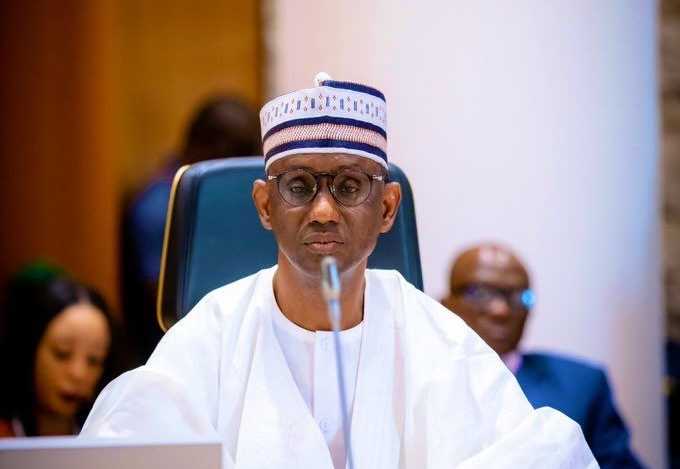
The Office of the National Security Adviser (ONSA) public acknowledgement that it provides weapons and support to trained hunters and vigilante groups as part of Nigeria’s strategy to combat terrorism, banditry and other violent crimes has raised concerns and intensified debate over the role of non-state actors in national security operations.
In a statement issued earlier this week, the Head of Strategic Communications at the National Counter Terrorism Centre (NCTC), which operates under ONSA, Abu Michael, defended the arming of irregular auxiliaries as lawful, strategic and rooted in the National Counter Terrorism Strategy (NACTEST). He said the Federal Government’s hybrid approach — pairing regular security forces with vetted community elements such as hunters and vigilantes — is aimed at degrading the capabilities of bandits and terrorist cells, particularly in hard-to-reach forested terrain.
According to the NCTC, this hybrid operational model is not unprecedented, citing Nigeria’s use of the Civilian Joint Task Force in the North-East against Boko Haram as a successful precedent. Mr. Michael reiterated that all personnel involved are recruited and vetted by authorised intelligence and security agencies, and that operations are conducted in accordance with legal frameworks.
Socio-Cultural Groups and ONSA Denials
Responding to widespread online claims that the ONSA had supplied arms to socio-cultural associations, including the Miyetti Allah Cattle Breeders Association, the agency issued categorical denials. The NCTC stated that, while some vigilante members have taken part in coordinated security activities, no government agency is conducting kinetic operations with socio-cultural organisations and that such allegations are false and misleading.
Political Backlash and Calls for Probe
The disclosures have triggered sharp political reactions. Comrade Timi Frank, a veteran politician and former APC spokesman, this week called on President Bola Ahmed Tinubu to order an independent investigation into the conduct of the National Security Adviser, Mallam Nuhu Ribadu, and the Governor of Kwara State, AbdulRahman AbdulRasaq, over conflicting narratives about the source of the arms. Mr. Frank characterised the situation as a “chain of official contradictions” and urged foreign partners to consider visa restrictions and caution in intelligence cooperation until matters are clarified.
Critics argue that the oscillation between admission and denial by security officials has raised serious questions about transparency and accountability. Some have cautioned that involving armed non-state elements in complex security environments could deepen mistrust in local communities and potentially fuel further conflict.
The controversy unfolds against the backdrop of persistent insecurity across Nigeria, marked by recurring bandit attacks, kidnappings and violent clashes between criminal networks and civilians. Heightened risks during the ongoing Yuletide season have prompted the NSA’s office to issue an emergency security alert urging governors to enhance collaborative preparedness.
ONSA maintains that while it supports transparency and public understanding of counter-terrorism efforts, it must balance this with safeguarding operational security and protecting personnel. The agency has urged media organisations and the public to rely on verified official channels when reporting on sensitive security matters.
The initial controversy erupted following the recovery of a rifle allegedly traced to a government-issued cache during a security incident in Kwara State. Viral videos and unverified reports escalated public concerns, leading to intense scrutiny of federal and state roles in arming local security actors.
