
By Justina Abbah, Abuja.
Law enforcement and judicial officials have been urged to undergo specialised training to better recognise and respond to crimes targeting persons with disabilities.
Participants at a landmark stakeholders dialogue on disability inclusion and crime prevention held last Friday at the United Nations House in Abuja, also called for awareness campaigns to dismantle stereotypes and promote universal accessibility in institutions and services.
The dialogue underscored the imperative that accessibility and protection from crime are fundamental human rights for persons with disabilities.
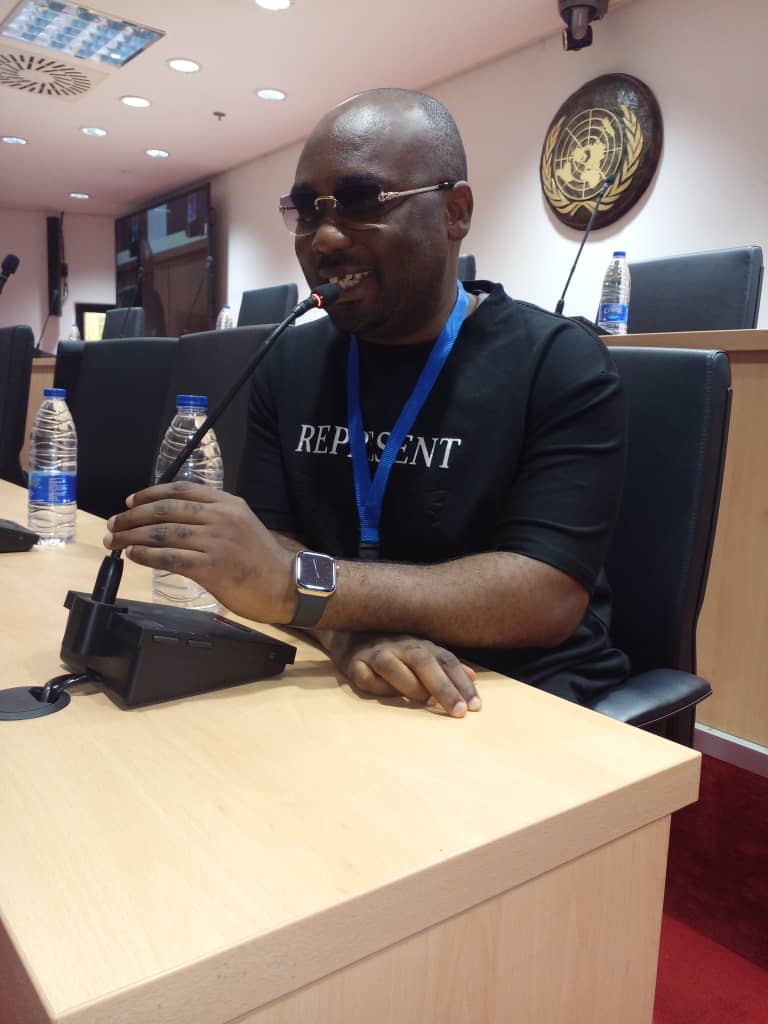
The event — “Inclusive Crime Prevention and Transnational Threats: Integrating Persons with Disabilities” — brought together government officials, representatives of disability advocacy groups, law enforcement, civil society, and international partners in a collaborative dialogue aimed at ensuring persons with disabilities are not left behind in Nigeria’s national and global crime prevention agenda.
The dialogue reaffirmed Nigeria’s leadership in implementing inclusive practices, encouraging stronger coordination between international partners, government agencies, and disability advocacy organisations.
UNODC’s strategic vision for Nigeria 2026–2030 specifically emphasises the inclusion of persons with disabilities in crime prevention and justice programming.
Hosted in the Main Auditorium of the United Nations House, Mr. Danilo Campisi, Deputy Country Representative of UNODC Nigeria, delivered overview remarks on the organisation’s commitment to an inclusive approach to crime prevention.
In his opening address Mr. Mohammed Malick Fall, the United Nations Resident Coordinator in Nigeria, emphasised the importance of embedding disability inclusion within policies that combat organised crime and other transnational threats.
In a goodwill message, Senior Special Assistant to the President on Disability Matters, Mohammed Isa Abba, reiterated the federal government’s commitment to disability rights and inclusive public safety.
The Accessibility is a human right: Global initiative promotes inclusive crime prevention for persons with disabilities in Nigeria was represented by Theophilus Odaudu, while the National Association of the Blind offered spoken word performances and light music illustrating dignity and resilience.
Barr. Ikem Uchegbulam, Member of the National Commission for Persons with Disabilities (NCPWD), highlighted other key focus areas of the dialogue:
• Inclusive Crime Prevention: Speakers stressed that accessibility and inclusion are not privileges but fundamental human rights. Evidence and testimonies presented during discussions revealed that persons with disabilities are disproportionately vulnerable to organised crime, including trafficking, exploitation and fraud — an issue requiring bespoke prevention strategies.
• Legal and Policy Frameworks: Participants reviewed existing Nigerian laws and international instruments — including the Convention on the Rights of Persons with Disabilities (CRPD) — and explored ways to align national frameworks with global standards.
During a focused group discussion, disability rights advocate Abidemi Omotola remarked that as Nigeria intensifies efforts against transnational crime, adopting an inclusive approach signifies a major advancement. “Safeguarding the rights of persons with disabilities not only strengthens societal cohesion but also enhances the effectiveness of crime prevention efforts at all levels,” Omotola stated.
This stakeholder dialogue builds on recent national efforts in disability inclusion, including push for accessible budgeting, awareness campaigns, and policy dialogues that advocate for meaningful participation of persons with disabilities in all facets of public life.
Organisers of the event expressed hope that today’s discussions will translate into concrete action — with commitments from partners to mainstream disability considerations across national crime prevention strategies and cross-border cooperation frameworks.
