
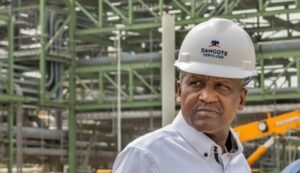
Africa’s richest man and industrialist Aliko Dangote has intensified his dispute with the Nigerian Midstream and Downstream Petroleum Regulatory Authority (NMDPRA), accusing its Chief Executive, Farouk Ahmed, of corruption and economic misconduct — allegations that have sparked calls for formal investigations and also drawn pushback from civil society groups.
The feud, which has been simmering for months, boiled over at a media briefing held by Dangote on Sunday at his Dangote Petroleum Refinery and Fertiliser Plant in Lekki, Lagos. In that briefing:
Dangote’s core allegations include the following:
• Unexplained Expenditure on School Fees:
Dangote alleges that Farouk Ahmed spent approximately $5 million on the secondary school education of his four children in Switzerland — a figure Dangote says is inconsistent with the income of a public sector official. He described this as a *potential indicator of corrupt enrichment or misuse of office *.
• Economic Sabotage of Nigeria’s Oil Sector:
Dangote also framed his critique within a broader allegation that NMDPRA’s policies — particularly the issuance of large import licences for petroleum products — are undermining local refining capacity, including his own refinery. He has called this economic sabotage.
• Calls for Official Investigations:
Dangote has urged authorities like the Code of Conduct Bureau (CCB) and other anti-corruption agencies to investigate whether Ahmed’s income as a public servant could reasonably support such spending. He has not publicly provided evidence of misuse of public funds but insists the situation deserves scrutiny.
Dangote has argued that continued heavy licensing of petroleum product imports — at a time when local refining capacity exists — suggests regulatory capture or misaligned incentives within the NMDPRA that benefit importers over domestic producers. This forms part of his broader economic argument against Ahmed’s stewardship of the sector.
As of the latest reports, the regulator has not publicly confirmed the specific school-fee figures, and in past months the NMDPRA has described various public allegations against its CEO as unfounded or part of smear campaigns — citing what it calls ongoing oversight and routine financial audits as evidence of transparency.
Some groups have backed Dangote’s position and called for investigations, protests, and formal complaints to anti-graft agencies. Tori.ng
Other civil society organisations have criticised the allegations, calling them baseless or politically motivated, and even issued public apologies to Farouk Ahmed after retracting earlier claims.
Energy sector analysts and consumer advocates have weighed in, noting that spending on private education alone does not prove corruption without a transparent financial audit or documented misuse of public funds — and that improper attribution can damage institutional integrity if not verified.
Dangote has pledged to pursue legal action if his allegations are denied, including potential suits to compel disclosure of specific payments and educational expenses.
Calls for official investigations by Nigeria’s anti-corruption agencies (such as the EFCC, ICPC, and CCB) are gaining traction in some quarters — though the NMDPRA rejects the premise.
The dispute highlights longstanding concerns in Nigeria about:
• Regulatory integrity in the oil sector;
• Public trust and accountability of senior officials;
• The gap between perceived wealth and official earnings;
• And the difficulty of proving corruption without transparent financial records.
If formal investigations are launched and documented findings released, it could become one of the year’s most significant high-profile corruption cases in Nigeria’s public sector.
