

By Frank Tietie
One recurring misconception in Nigeria’s public discourse is the belief that prosecution for criminal offences is either automatic or time-barred. Both assumptions are wrong. Under Nigerian law, the decision to prosecute is, in the first instance, discretionary, and criminal liability does not evaporate with the passage of time. Crime has no expiry date.
The recent decision of the Economic and Financial Crimes Commission (EFCC) to arraign a former Minister of Labour, Dr Chris Ngige, and to intensify investigation and possible prosecution of a former Attorney-General of the Federation and Minister of Justice, Abubakar Malami, has once again brought this legal reality to the fore. These developments have provoked predictable political reactions, but the law is far less emotional and far more settled than the debates suggest.

In the case of Abubakar Malami, he should not be afraid or cry witchhunt but take a cue from his predecessor, Bello Adoke, who was haunted from all sides with every possible accusation and the full compliments of state prosecutorial might deployed against him, yet with solid documentary evidence, was fully exculpated after quite some ordeal and rigorous legal process. Malami needs not worry, he should simply face the music he once played.
Prosecution is a matter of discretion, not sentiment. In Nigeria, the power to prosecute criminal offences in Nigeria is vested in the Attorney-General of the Federation or a State, as well as agencies such as the EFCC and ICP,C acting within their statutory mandates. Discretion, however, does not mean arbitrariness; it means that prosecutorial authorities are empowered to decide when, how, and against whom to initiate proceedings, based on available evidence, public interest, and the likelihood of securing justice.
It is therefore neither illegal nor unusual for a government or a prosecutorial agency to defer action against a suspect, only for a later administration or leadership to revive the matter. What matters is not political timing but evidential sufficiency and legal propriety. There is no limitation of time for criminal offences. Unlike civil claims, most criminal offences in Nigeria are not subject to limitation periods. A crime committed ten, twenty, or even thirty years ago does not become lawful or forgotten simply because time has passed. Once an offence is disclosed and evidence is made available, prosecution can lawfully follow regardless of when the suspect held office or which political party was in power at the time.
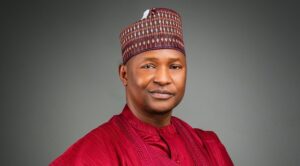
This is why it is legally irrelevant that some individuals currently serving in the APC-led government who are under investigation by the EFCC or the Independent Corrupt Practices and Other Related Offences Commission (ICPC), have just been given political appointments despite the unresolved allegations and ongoing investigations against them. Let it be known that a political appointment is not an acquittal or defence against prosecution. It may show the unscrupulous nature of the appointors. Political protection is not a judicial shield. Another government, or even the same government under a “renewed hope”, may yet bring such persons to book. The lesson here is that today’s immunity gained from an appointment cannot be a defence against prosecution tomorrow.
However, there is need for impartial and timely investigation by the EFCC and ICPC in the face of the allegations. While discretion exists, it must be exercised responsibly and in the public interest. This is why the ICPC, particularly must now act decisively in relation to recent accusations of corruption levelled by Alhaji Aliko Dangote against Farouk Ahmed, the CEO of the Nigerian Midstream and Downstream Petroleum Regulatory Authority (NMDPRA).
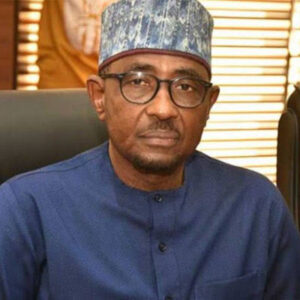

The allegations against Farouk are grave and touch directly on the regulatory integrity of the NMDPRA as to whether it is engaged in economic sabotage, and abuse of public trust. Going by the allegations, Farouk must either be a very big thief in government or such a shrewd investor somewhere to be capable of affording 5 Million US Dollars for just secondary school education of his children in Switzerland. If President Tinubu likes, he should turn a blind eye and a deaf ear to the allegations against this regulator whom many Nigerians see as an enemy within for trying to frustrate the availability of cheap petrol from the Dangote Refinery to suffering Nigerian masses.
It is therefore very important for the ICPC to immediately commence a transparent and highly professional investigation that it is known for, against the said Farouk Ahmed. The ICPC cannot afford to be silent and delay by waiting for a petition before it acts. We can even write a petition to it immediately if that is what it will take for it to quickly activate its powers to investigate and where necessary to prosecute Mr Farouk. Delays by the ICPC or EFCC only fuels suspicion and undermines confidence in anti-corruption institutions.
Regulators like Farouk who wield enormous power, have tremendous propensity to act with corrupt motives, the consequences of which can be very devastating. Allegations that a regulator may be frustrating the operations of the Dangote Refinery, an infrastructure project designed to enhance national energy security, create jobs, and reduce foreign exchange pressure, are too serious to be ignored.
Nigeria cannot afford a situation where personal greed or alleged attempts at extortion hinder strategic national investments. If proven, such conduct would represent not just corruption but a direct assault on the public interest.
The prosecution of Dr. Chris Ngige and the investigation of Abubakar Malami underscore a fundamental truth: discretion may delay justice, but it does not abolish it. Criminal responsibility endures beyond office, beyond party lines, and beyond time itself.
For those currently in power who believe that today’s influence guarantees permanent safety, history and law say otherwise. And for anti-corruption agencies, the mandate is clear: act without fear or favour, promptly and impartially, because justice delayed must never become justice denied.■
● Tietie, a legal practitioner, public affairs analyst, and human rights advocate, writes from Abuja.
