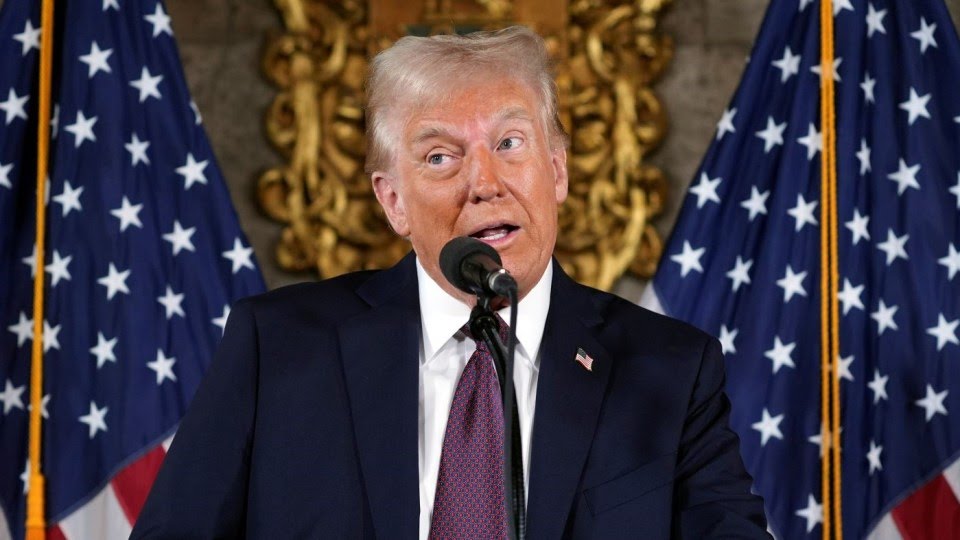
The United States House Appropriations Committee has publicly reaffirmed support for Donald J. Trump’s renewed push to address what he describes as the escalating killings of Christians in Nigeria. In a statement posted to the committee’s official X account, lawmakers declared that Congress will “not look away as innocent lives are stolen,” underscoring that religious freedom and protection of persecuted communities — especially Nigerian Christians — remain central to the committee’s National Security and Related Programs (NSRP) agenda.
The statement follows a high-profile fact-finding mission to Nigeria by a congressional delegation acting under direct orders from Trump. The delegation reportedly visited with Christian community leaders in the country’s Middle Belt states — including members of Catholic and Tiv communities in Benue — one of the regions identified as among the most affected by violent attacks.
Lawmakers on the mission, including Riley Moore, described their visit as “very productive,” asserting that it yielded valuable firsthand insight to inform a forthcoming congressional report. That report is expected to influence U.S. policy, potentially including sanctions, aid restrictions, and other measures under atrocity-response frameworks.
Trump’s move to re-designate Nigeria as a Country of Particular Concern (CPC) under the U.S. International Religious Freedom Act (IRFA) has added urgency to the issue. First announced on October 31, 2025, the CPC status is reserved for countries the U.S. deems responsible for “systematic, ongoing, and egregious violations of religious freedom.”
Advocacy organizations such as the United States Commission on International Religious Freedom (USCIRF) welcomed the move, arguing it should prompt a coordinated U.S.–Nigeria effort to hold perpetrators accountable and protect vulnerable religious communities.
In Congress, 31 lawmakers issued a joint statement praising Trump’s decision as a “bold and moral step” to defend Christians worldwide. The statement called for concrete U.S. measures — including targeted sanctions, visa bans, and pressure on Nigeria to prosecute individuals and groups engaged in religious violence.
The congressional reaffirmation arrives as several U.S. House committees and subcommittees intensify scrutiny of Nigeria’s human-rights record. According to a recent release from the House Appropriations Committee, work is already underway to draft a comprehensive U.S. policy response.
Meanwhile, international human-rights organisations warn that the violence in Nigeria — much of it attributed to jihadist groups or militias such as those linked to the Fulani ethnic community — is deeply rooted and complex. They stress that while many victims are Christians, the broader security crisis is shaped by overlapping factors including weak governance, land disputes, and ethnic tensions.
The Nigerian federal government has strongly rejected the “genocide” label and the CPC designation. Officials reaffirm that Nigeria is committed to safeguarding religious freedom and insist that the violence transcends religious lines — affecting both Christians and Muslims. They argue that much of the unrest stems from banditry, resource conflicts, and broader insurgency, not religious persecution.
With the congressional backing and ongoing legislative work, Washington appears poised to intensify diplomatic and security pressure on Abuja. Potential outcomes under consideration include targeted sanctions, visa bans, cut-offs of non-humanitarian assistance, and increased support for civil society and internally displaced persons (IDPs).
For Nigeria — a strategic partner for the U.S. in counterterrorism and regional stability — the stakes are high. The response from Abuja will likely shape not just bilateral relations, but also broader international engagement on human rights and religious freedom.
