
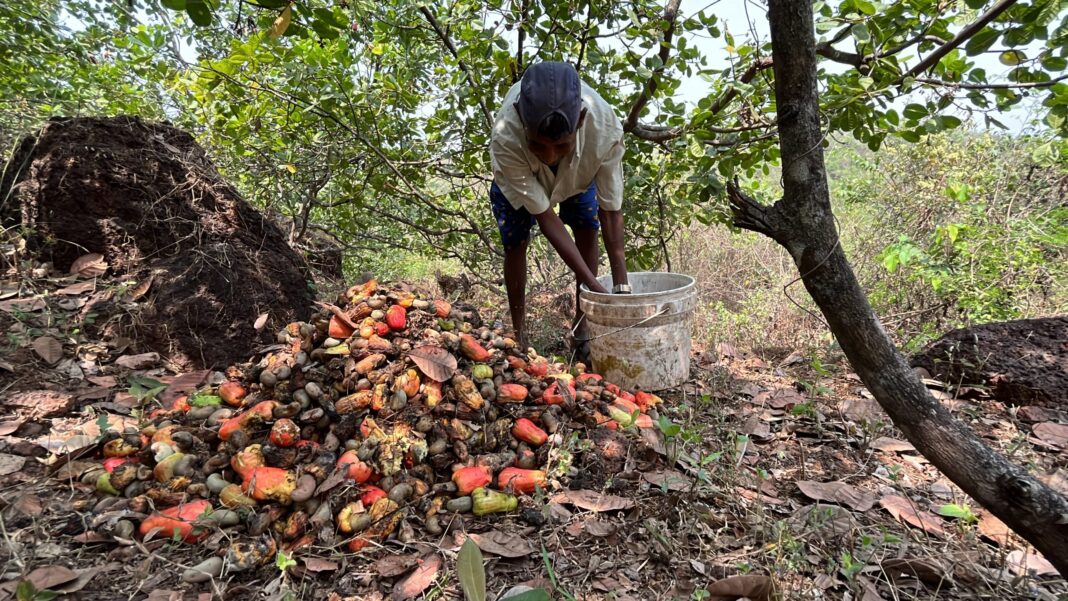
Once nestled in the quiet farmland of Kogi State — where the banks of the Niger and Benue rivers meet in heritage and harvest — a humble nut has broken through the clouds of obscurity. Today, the “Kogi cashew” stands tall, recognized not just in Nigeria but on the global stage.
A Giant Leap for Nigeria’s Cashew Industry
At the recent gathering of the Vietnam Cashew Association (VINACAS) in Hanoi — the 14th Golden Cashew Rendezvous 2025 — Nigeria and Vietnam signed a landmark Memorandum of Understanding (MoU) to deepen cooperation in cashew production, processing and technology.
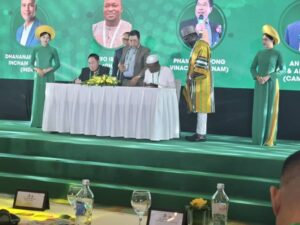
National Cashew Association of Nigeria (NCAN) President Dr. Ojo Joseph Ajanaku declared this pact a turning point for Nigeria’s non-oil export ambitions.
Here’s the thrilling part:
• Nigeria’s cashew exports to Vietnam soared to US$420 million in 2025.
• At the Summit, Kogi’s cashew was singled out as the most nutritious and flavourful variety in the world.
• Vietnam pledged to share its technology (it has more than 500 member firms) to help Nigeria move from exporting raw nuts to processing and value-adding in-country.
Why Kogi Matters — And Why This Is Big for Kogites
In the heart of Kogi, this is more than agriculture — it’s identity, heritage and economic hope. Some of the key facts:
• Kogi State is one of Nigeria’s leading cashew producers, with large areas dedicated to cashew nut cultivation.
• With the recognition of Kogi’s cashew quality at the global level, local farmers and communities now have a story to tell — and a brand they can point to with pride.
• The new partnership with Vietnam promises job creation, processing plants, technology transfer, and a shift from raw exports to finished products (cashew juice, kernels, by-products) in Kogi.
From Soil to Global Stage: The Promise and the Challenge
Imagine a Kogi farmer — aged tree cashew orchard, under the sun, harvesting nuts that are shipped halfway across the world. Now imagine that same farmer, harvesting nuts that are processed locally, packed in Kogi-branded jute bags, exported with a premium, generating jobs and wealth for his community. That is the story unfolding.
But it’s not without hurdles:
• Historically, while production was high, processing in Nigeria lagged and many raw nuts were shipped abroad for value-addition elsewhere.
• Local dealers have raised concerns about foreign firms bypassing local value chains and buying directly from farmers, which undermines local economic benefit.
What This Means for Kogi indigenes and Nigerians
For you — whether you’re farmers in Kabba-Bunu, Idah, Lokoja or investors, youth and entrepreneurs — this is a call to action:
• Kogi’s cashew has “world-class credentials” now. Use this to build value chains in the state.
• With the MoU and incoming Vietnamese technology, now is the time to shift from raw nut sales to processing, packaging, branding and export.
• The Government of Kogi, through Kogi State Commodity Exchange Export Promotion and Marketing Development Agency (KOSCEPA) is already planting 15 million trees, aiming for 150,000 metric tonnes by 2027.
• For the everyday Nigerian, this means agriculture beyond subsistence — it means non-oil export, jobs, foreign exchange.
A Proud Declaration
Tiday, “Cashew is the new oil, and Kogi is its capital.” A bold statement, yes — but one backed by facts, global recognition and homegrown potential.
In Kogi’s fields, beneath the green canopy, lies not just a nut — but a future. A future where a Kogi farmer’s yield is not just sent abroad raw, but processed in-state, turned into kernels, juice, even cashew-butter, packaged in Kogi-branded bag, exported globally — and the value stays in Kogi, stays in Nigeria.
Let’s seize it.
