
The Asset Management Corporation of Nigeria (AMCON) has formally taken over General Hydrocarbons Limited (GHL), an oil exploration and production company owned by media mogul Nduka Obaigbena, placing it under receivership in what has become one of Nigeria’s most closely watched corporate loan disputes.
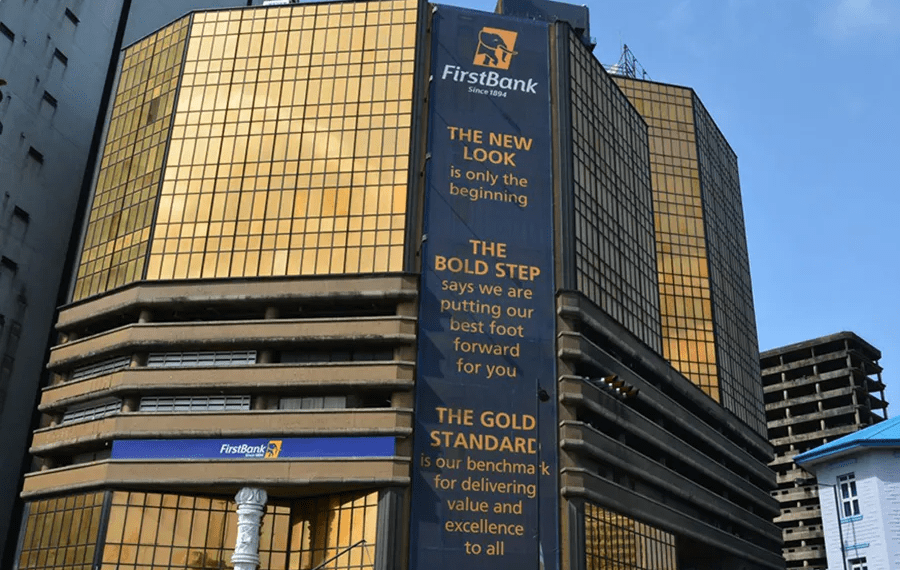
The move, confirmed through a receivership notice published in national dailies on November 6, 2025, marks a major escalation in the long-running legal tussle between First Bank of Nigeria Plc (FirstBank) and GHL over alleged unpaid loans connected to Oil Mining Lease (OML) 120.
According to the public notice, Oluseyi Akinwunmi has been appointed as the Receiver/Manager of GHL under a Deed of Appointment dated September 18, 2025, duly registered under the Companies and Allied Matters Act (CAMA) 2020.
The notice directs:
• All GHL debtors to make payments into a designated receivership account.
• All creditors to submit claims within 30 days, accompanied by sworn affidavits verifying their debts.
• All banks and financial institutions to freeze deposits, cash holdings, and any other assets linked to GHL pending further instructions.
AMCON invoked Section 48 of the AMCON Act (2010), which empowers it to assume control or appoint a receiver for companies with unresolved non-performing loans acquired from Nigerian banks.
GHL has rejected the takeover, describing it as “a gross violation of subsisting court orders.”
The company cites an interim injunction granted by Justice Lewis Allagoa of the Federal High Court, Lagos, in Suit No: FHC/L/CS/1903/2025, dated September 23, 2025, which restrains AMCON, FirstBank, and the Attorney-General of the Federation from taking any enforcement action against GHL or its assets pending the determination of an ongoing motion.
Despite this, AMCON proceeded to publish the receivership notice — prompting sharp criticism from GHL’s lawyers, who accused the corporation of “abuse of judicial process” and contempt of court.
In a statement reported by ThisDay, GHL said it neither borrowed directly from AMCON nor has any non-performing loan with FirstBank, and insisted that its financial disputes were still under adjudication at various courts, including the Supreme Court (Suit No: SC/CV/929/2025) and a pending arbitration matter (Suit No: FHC/L/CS/2241/2025).
The dispute originates from GHL’s involvement with OML 120, an offshore oil block tied to transactions with Atlantic Energy and FirstBank.
FirstBank has alleged that proceeds from a crude oil cargo pledged as collateral for a loan were diverted, breaching the loan agreement. The bank subsequently classified the loan as non-performing, paving the way for AMCON’s intervention.
Earlier this year, a Mareva injunction freezing GHL-related accounts up to $225.8 million was vacated by the Federal High Court. However, in September 2025, the Court of Appeal ruled in FirstBank’s favour, ordering that all proceeds from the disputed crude sale be paid into a court-controlled escrow account pending final judgment.
AMCON maintains that the receivership was properly executed, with the Deed of Appointment and Notice duly registered.
FirstBank, for its part, argues that GHL remains liable under an “Outstanding Exposure Tripartite Deed” and that the bank’s enforcement rights were triggered after repeated defaults.
The two institutions have said that their actions are in line with Nigerian banking and insolvency laws, asserting that GHL’s objections amount to delaying tactics.
Under the AMCON Act, when a bank identifies a loan as non-performing, AMCON can purchase the debt and assume enforcement powers — including the appointment of a receiver.
GHL counters that AMCON’s move is premature, given the subsisting injunctions and arbitration proceedings. Legal analysts note that if the courts uphold AMCON’s action despite the injunction, it could set a precedent for creditor enforcement even when litigation is ongoing — a scenario that would reshape Nigeria’s corporate debt-recovery landscape.
Though the receivership targets GHL, the spotlight has turned to Obaigbena’s media empire, which includes ThisDay Newspapers and Arise Television. Analysts warn that continued financial pressure could pose indirect risks to those media holdings if creditors seek to widen enforcement.
The GHL–FirstBank–AMCON saga underscores long-standing concerns about corporate governance, debt securitisation, and the enforcement of creditors’ rights in Nigeria’s oil-finance ecosystem.
The case highlights banks’ continued exposure to energy-sector borrowers, where volatility in oil revenues can quickly turn large loans into toxic assets.
Critics caution that if AMCON’s receivership proceeds despite court injunctions, it could undermine investor confidence and raise fresh doubts about judicial independence in commercial enforcement.
Among others, stakeholders and observers are watching out for the following:
• Court Hearing (November 11, 2025): The Federal High Court in Lagos, presided over by Justice Allagoa, will resume hearings in GHL’s suit to determine whether AMCON’s receivership constitutes contempt.
• Operational Control: Pending court outcomes, AMCON’s receiver now wields substantial control over GHL’s finances and assets.
• Negotiation Prospects: Legal observers say both sides could still settle out of court, especially if GHL offers to restructure its exposure or FirstBank seeks to limit reputational fallout.
• Reputational Stakes: AMCON’s aggressive enforcement may reinforce its recovery credentials but risks perception damage if courts find it acted ultra vires. GHL, conversely, faces the dual challenge of preserving its oil assets while safeguarding its media reputation.
