
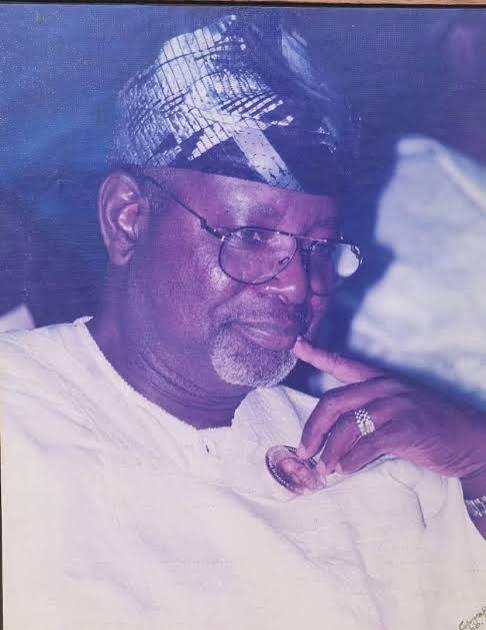
Nigeria is in mourning following the death of Major General Mohammed Abdullahi Adangba (Rtd.), a towering figure in the nation’s military and political history, who passed away in the early hours of Wednesday in Abuja at the age of 86. Tributes have poured in from across the country, honoring his decades of service and profound impact on national security and governance.
Born in Ilorin, Kwara State, in 1939, General Abdullahi attended the Royal Military Academy, Sandhurst, in the United Kingdom, and was commissioned into the Nigerian Army in 1958. Over an illustrious career spanning more than three decades, he rose through the ranks to become Director of Military Intelligence and played a notable role in the 1975 coup that brought General Murtala Mohammed to power.
Following the change of government, Abdullahi was appointed Military Governor of Benue-Plateau State, serving from July 1975 to March 1976. Under General Olusegun Obasanjo’s military regime, he became the pioneer Director-General of the National Security Organisation (NSO)—the precursor to today’s Department of State Services (DSS)—a position he held from 1976 to 1979.
After retiring from active service in 1979, Abdullahi ventured into private enterprise as Managing Director of Atoto Press Limited in Ilorin. His commitment to national service continued when he was appointed National Security Adviser (NSA) to Head of State General Abdulsalami Abubakar in 1998, playing a crucial role in the nation’s transition to democracy. With the advent of the Fourth Republic, he was appointed the pioneer Chief of Staff to President Olusegun Obasanjo, a position he retained under President Umaru Musa Yar’Adua until his resignation in 2008.
Throughout his distinguished career, General Abdullahi was widely regarded as a disciplined officer, trusted aide, and silent power broker whose efforts contributed significantly to Nigeria’s political stability and national security.
President Bola Tinubu led tributes to the late general, describing him as “a disciplined, loyal, and patriotic officer” whose contributions to Nigeria’s security architecture were “indelible.” Tinubu praised his “humility, efficiency, and unwavering commitment to the Nigerian project,” noting that Abdullahi’s leadership helped shape the modern workings of the Presidency.
Kwara State Governor AbdulRahman AbdulRazaq expressed deep sorrow, calling his death “a painful closure of a bright page in Nigeria’s political and military history.” He described Abdullahi as “a fine soldier, administrator, and community leader,” adding that his passing was a profound loss not just to the Ilorin Emirate but to the entire nation. The governor extended condolences to the Emir of Ilorin, Dr. Ibrahim Sulu-Gambari, the late general’s family, and the military hierarchy, praying to Allah to grant him Al-Jannah Firdaus.
The Emir of Ilorin, Alhaji Ibrahim Sulu-Gambari, also mourned the loss, calling Abdullahi “a proud son of the Ilorin Emirate and a distinguished Nigerian who used his influence to promote national unity and humanity.” The Emir prayed for Allah’s mercy upon his soul and for his admittance into paradise.
Former Senate President Dr. Abubakar Bukola Saraki described Abdullahi as “a great soldier, administrator, and patriot” who rendered selfless service to the nation. “Our country has lost a good soldier, intelligence officer, and patriot,” Saraki said, adding that his wisdom would have been invaluable in today’s security climate.
The Ilorin Emirate Descendants Progressive Union (IEDPU) also paid tribute, noting that Abdullahi was the first son of Ilorin to govern a state and attain the rank of a two-star general. The union highlighted his pivotal roles during critical moments in Nigeria’s history and his lasting contributions to community development.
Condolence messages also poured in from the Nigerian Armed Forces, the governments of Kwara and Plateau States, and former Presidents Olusegun Obasanjo and Abdulsalami Abubakar.
As Nigeria bids farewell to one of its most influential statesmen, General Mohammed Abdullahi Adangba’s legacy will endure through the institutions he helped build and the countless lives he touched. According to family sources, burial arrangements will be announced later in accordance with Islamic rites.
