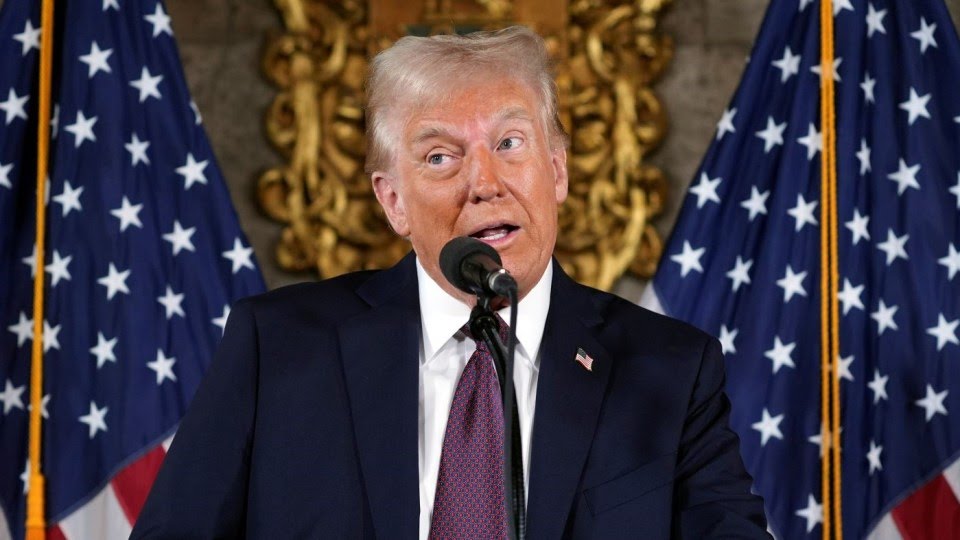
On Friday, U.S. President Donald J. Trump declared that Nigeria will be designated a “country of particular concern” under U.S. law, citing alleged mass killings of Christians by radical Islamist groups. This move marks a major escalation in Washington’s posture toward Africa’s most populous nation.
At an event a day earlier, the Federal Government through its Minister of Foreign Affairs, Ambassador Yusuf Tuggar had made strenuous to debunk claims of Christian-targeted killings He described the claims of genocide as a “repeatedly told lie” sustained by coordinated local and global propaganda
In a post on his Truth Social platform, later shared on the official White House X account, Trump said: “Christianity is facing an existential threat in Nigeria. Thousands of Christians are being killed. Radical Islamists are responsible for this mass slaughter. I am hereby designating Nigeria a ‘country of particular concern’.” He cited figures of “3,100 versus 4,476 worldwide” for Christian fatalities, described the situation as a humanitarian crisis and asked U.S. legislators (including Rep. Riley Moore and Rep. Tom Cole) and the House Appropriations Committee to investigate and report back. Reuters+1
Under the International Religious Freedom Act (IRFA) of 1998, administered via the U.S. Department of State, designation as a “Country of Particular Concern” (CPC) is reserved for nations found to engage in “systematic, ongoing, and egregious violations of religious freedom,” per Wikipedia The status authorises a range of diplomatic actions up to and including sanctions.
Background & significance
• Nigeria has been under persistent scrutiny by the U.S. Commission on International Religious Freedom (USCIRF), which for years has urged the U.S. government to list Nigeria as a CPC. The Commission cited attacks on Christians, failures to protect vulnerable religious communities, and the activities of militant groups such as Boko Haram and Islamic State West Africa Province (ISWAP).
• Data from the non-profit Observatory for Religious Freedom in Africa (ORFA) reports that between 2019 and 2023, approximately 16,769 Christians were killed in Nigeria, out of around 55,910 total fatalities in 9,970 attacks.
• Nigeria’s legislative body, however, has pushed back on earlier proposals by the U.S. Senate to impose a CPC designation, saying it mischaracterises Nigeria’s security issues and constitutional protections for religious freedom.
• Historically, Nigeria was first designated as a CPC in 2020, but later removed from that list, prompting criticism from USCIRF and others.
What this means & possible consequences
The designation is more than symbolic: it signals a serious step by Washington toward holding Nigeria accountable for the treatment of its religious communities. Possible consequences include:
• Restrictions or cuts to non-humanitarian U.S. aid to Nigeria.
• Disruption of military or security cooperation if linked to suspected perpetrators of religious-based violence.
• Diplomatic pressure on Nigeria’s federal and state governments to improve protection for religious minorities and investigate attacks.
For Nigeria, the move comes as it grapples with longstanding insurgency, herder-farmer conflicts, inter-communal violence and serious questions around state capacity to protect all citizens. While many attacks affect Christians, analysts caution the violence in Nigeria is complex and also affects Muslim communities.
Nigeria’s reaction
Nigeria’s government has not yet officially responded to this exact announcement, but past comparable efforts were met with strong objection from Abuja, which argued that broad labels risk misunderstanding Nigeria’s security challenges and unfairly cast them as religious persecution.
Earlier on Thursday, the Federal Government refuted allegations that it is complicit in the mass killing of Christians in Nigeria..
Minister of Foreign Affairs, Ambassador Yusuf Tuggar, made the statement, according to an online publication, PRNigeria, while hosting the management team of Image Merchants Promotion Limited (IMPR), publishers of PRNigeria and Economic Confidential, in his office.
The minister presented detailed analyses of Nigeria’s governance structure to the IMPR delegation, highlighting how the Constitution operates independently of religious bias or influence.
One document noted that the “linear and simplistic ‘us versus them’ or ‘persecutor versus victim’ dichotomy” implicit in the Christian persecution narrative tends to ignore the deeper historical, socio-cultural, and socio-economic contexts of conflict in Nigeria.
The report further explained that conflicts often portrayed as religious are, in reality, rooted in economic disputes. It warned that single narratives polarise debates, focus on blame rather than solutions, and ultimately undermine peacebuilding efforts.
The documents, which emphasise that most parts of the country are safe, have been forwarded to members of the U.S. Congress and the international community.
Ambassador Tuggar reaffirmed the government’s commitment to promoting unity and tolerance while engaging global partners to ensure balanced and fact-based reporting on the country’s internal affairs.
In the coming days, Washington and Abuja are likely to negotiate about next steps. U.S. lawmakers will investigate and potentially recommend further measures. Nigeria faces heightened scrutiny, and the designation could mark a turning point in how international actors address religious-based violence in the country.
The move adds another dimension to Nigeria’s international relations, possibly affecting trade, security partnerships and diplomatic engagement—as Nigeria tries to navigate both internal fragility and external pressure.
