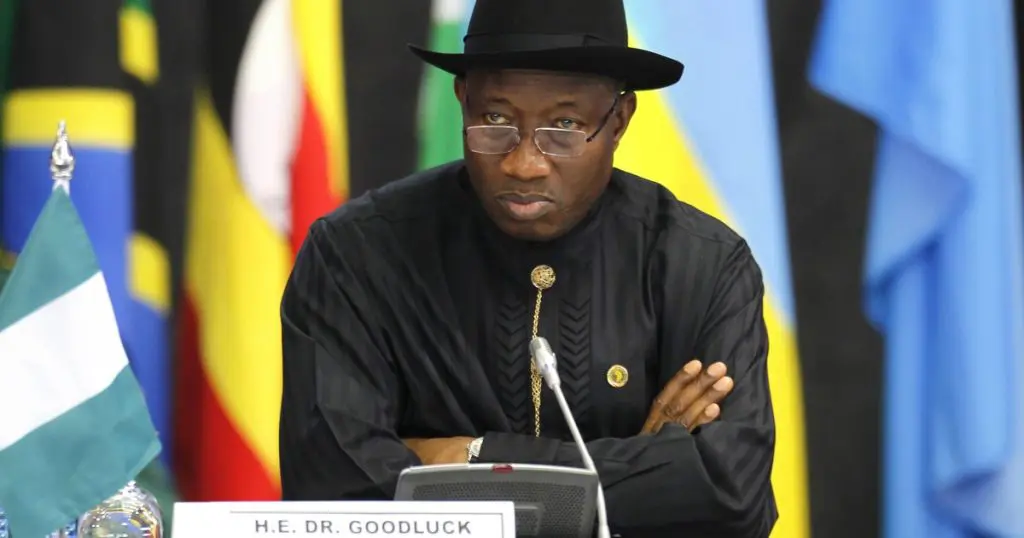
At the “Better Leader for a Better Nigeria” conference held by the Oxford Global Think Tank in Abuja, the Emir of Kano, Muhammadu Sanusi II, revealed new insight into why the Goodluck Jonathan-led federal government abandoned a full withdrawal of the fuel-subsidy regime in 2012. Rather than backing down purely due to public protest, Sanusi says, the decision was significantly shaped by acute national-security concerns associated with the insurgency of Boko Haram.
Sanusi—who served as Governor of the Central Bank of Nigeria (CBN) from 2009-2014 and was one of the most vocal advocates for subsidy removal—described the so-called “fuel subsidy” as in fact a dangerously unsustainable “hedge”. He explained that the federal government had guaranteed a fixed pump price of petrol regardless of shifts in global crude prices, exchange rates or interest rates, meaning Nigeria was exposed to unlimited cost escalation.
“It was not a subsidy… what we had in this country is what in risk-management you call a naked hedge. The worst possible derivative you can have.” — Muhammadu Sanusi II
He gave this breakdown: as oil prices rose from US $40 to US $140 per barrel, exchange rate moved from N155 to N300, interest rates rose from 5 % to 15 %—all costs the government absorbed.
He said: “We moved from using revenues to pay subsidies, to borrowing money to pay subsidies, to borrowing money to pay interest on the borrowed money. We had become bankrupt.”
Sanusi maintained that if the Jonathan government had removed the subsidy in 2011, the pain would have been “a very, very tiny fraction” of what Nigerians now face.
Why the hold-up? Sanusi says the crucial reason for the partial back-down—specifically the decision to do “50 % not 100 %” of the intended withdrawal—was the very real fear that Boko Haram might exploit the nationwide demonstrations triggered by subsidy removal and carry out suicide bombing attacks, turning a protest into a mass-casualty event.
“If one day one of these suicide-bombers goes to these Nigerians and explodes the bomb, and you have 200 corpses, it will no longer be about subsidy.” — Sanusi
In his account, the government under Jonathan was determined to enact the reform. He credits the president for that resolve—even though the security situation forced a compromise.
Beyond this, Sanusi used the platform to offer a broader critique of Nigeria’s political class: he lamented that many of the nation’s formally educated leaders operate as if “illiterates”, falling into praise-singing and self-interest rather than exercising responsibility and integrity.
He argued that leadership in Nigeria should be about service—educating children, saving lives, building infrastructure—not personal enrichment.
Recall that Boko Haram, which originated as a militant Islamist group in northeastern Nigeria around 2002–2009, by the early 2010s was conducting frequent suicide-bombing and mass-casualty attacks, especially in places like Kano, Abuja and Kaduna.
The “Occupy Nigeria” protests of January 2012 erupted when the government attempted to raise pump price by removing or reducing the subsidy; many Nigerians, including sitting President Bola Tinubu, believed the move would sharply increase living costs. Although the protests were widely publicised, Sanusi is emphasising that in government deliberations, the security dimension weighed heavily.
The idea of a “hedge” rather than a standard subsidy is a useful explanation of the financial logic: the government guaranteed a maximum price, making itself liable for any difference between global cost and domestic pump price—a structure with tail risk and no upside.
Nigeria’s economy has since suffered high inflation, exchange-rate pressure and fiscal stress—factors Sanusi links back to the delay in subsidy reform.
