
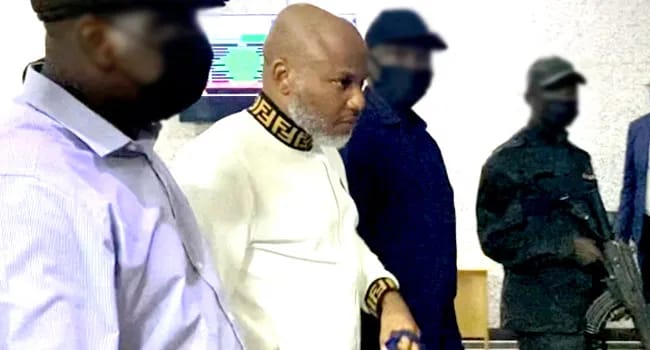
In a charged, high‑stakes scene unfolding in Abuja, the embattled leader of the banned Indigenous People of Biafra (IPOB), Nnamdi Kanu, has dramatically shifted the terrain of his long‑running trial: rejecting the classic defensive posture and instead signalling his readiness to enter full defence of the case against him.
On Monday, security forces moved swiftly to suppress protests in the Federal Capital City of Abuja called in support of Kanu — deploying tear‑gas, armoured vehicles and water‑cannons to block roads and stifle crowds.
Only hours later, in the halls of justice, Kanu delivered a blow to the prosecution’s tempo by formally declaring that he will begin his own defence — just as the court had earlier ruled he must.
Judge James Omotosho, presiding at the Federal High Court in Abuja, found that the federal government’s prosecution had established a prima facie case against Kanu. In other words: the evidence presented so far is sufficient to require Kanu to answer it — not convict him, but ensure his side is heard.
The court overruled Kanu’s “no‐case submission” strategy — a legal manoeuvre asking for dismissal before defence starts — and ordered the defence phase to begin.
In a motion filed Tuesday, Kanu personally informed the court he is ready to open his defence, according to a filing signed by him. He revealed plans to call 23 witnesses, divided into two categories: “ordinary but material” and “vital and compellable” under Section 232 of the Evidence Act, 2011.
He further requested a 90‑day timeframe to carry out his defence work, citing the number and complexity of witnesses to be marshalled.
Among those listed for possible summons: senior military and political figures — e.g., retired Generals Theophilus Danjuma and Tukur Buratai, governors from Lagos and Imo states, and former ministers. The notice said the defendant himself would testify, offering a “sworn account” that denies the prosecution’s narrative and situates his actions in a broader political context.
Kanu has been in detention — following an extraordinary rendition from Kenya in 2021 — and the state has labelled IPOB a terrorist organisation.
The trial has been shadowed by allegations of bias, jurisdiction challenges and concerns over solitary detention and health.
