
In a drama soaked with blood, forgiveness, and fury, the family of Bilyaminu Bello is tearing itself apart—again. And at the center of this explosive feud is one woman: Maryam Sanda, the wife who murdered her husband in a fit of rage, and now walks free under a controversial presidential pardon.
Once sentenced to hang for plunging a knife into her husband during a violent domestic clash in their upscale Abuja home back in 2017, Maryam is now tasting freedom—thanks to President Bola Ahmed Tinubu, who included her among 175 inmates granted clemency under Nigeria’s Prerogative of Mercy. But what was meant to be an act of compassion has instead reopened old wounds and ignited a no-holds-barred war within the Bello clan.

A Father’s Forgiveness… and a Family’s Fury
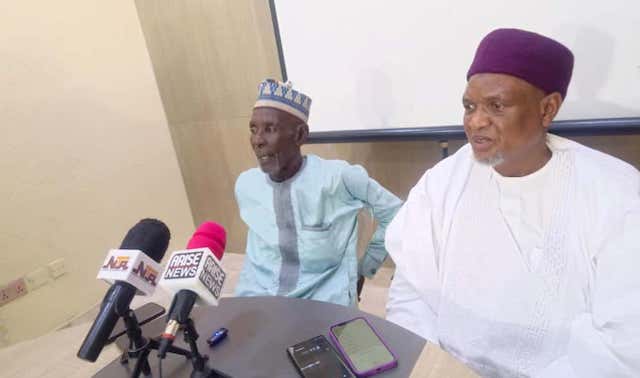
On one side of the battlefield stands Alhaji Ahmed Bello Isa, the biological father of the slain Bilyaminu. Stoic and composed at a press conference in Abuja, he declared that he had “long forgiven” his daughter-in-law and viewed her release as “the will of God.”
“I am happy that the father of the nation has released Maryam so she can care for her children,” he said with calm resolve. “I have no bitterness. Vengeance will not bring my son back. But forgiveness, perhaps, can bring peace.”
He even revealed that his appeals for clemency date back to 2019, before the death sentence was even pronounced. “I wrote letters. I pleaded. I saw her not as a murderer, but as the mother of my grandchildren. I chose mercy.”
But that olive branch was quickly torched by another branch of the family.
“A Slap in the Face of Justice”
Just 24 hours earlier, Dr. Bello Haliru Mohammed, Bilyaminu’s powerful uncle and a former PDP National Chairman, who is said to have brought him up, blasted Tinubu’s pardon as “the worst possible injustice”, branding it a grotesque betrayal of justice and a spit on the memory of a man whose death shocked the nation.
“This isn’t mercy. This is selective, manipulated leniency,” the family’s scathing statement read. “Maryam Sanda wasn’t just convicted—she was condemned by three courts, including the Supreme Court. She didn’t just kill our son—she butchered him, and now she walks free like it never happened.”
They didn’t stop there. The statement eviscerated the emotional narrative spun around Sanda’s children, calling it “a cynical ploy” to soften public sympathy. “She’s using the same children she orphaned as shields. Let’s not forget—she stole their father. Now she uses their faces to win mercy.”
And as for remorse?
“Not once did she show genuine regret. No tears. No apology. Just a cold, calculating silence. And now she’s rewarded? This is not justice—it’s a cruel joke.”
A House Divided
As Nigeria reels from the pardon, the Bello family is visibly split—torn between faith and fury, healing and heartbreak.
Alhaji Isa insists the path of forgiveness is the higher ground: “We do not all see the same way. But I am the father of the deceased, and my forgiveness is complete.”
Dr. Haliru, however, isn’t buying it. Insiders say he views the pardon as the result of powerful lobbying and elite connections, arguing that in Nigeria, justice bends to who you know, not what you’ve done.
And caught in the middle? Two children, now growing up in the long shadow of a murder that took their father, and the pardon that set their mother free.
Justice or Betrayal?
The Maryam Sanda saga once stood as a rare beacon of accountability in Nigeria’s flawed justice system. Now, many see the presidential pardon as its ultimate undoing.
One side of the family says: let it go. The other says: never forget.
But one chilling fact remains: a man is dead, killed by the woman he once loved. And while she steps back into the world, the family he left behind is trapped in a disagreement—one soaked in forgiveness, fury, and the lingering sting of unfinished justice.
Nigeria watches. The wounds are open. The reckoning, it seems, is far from over.
