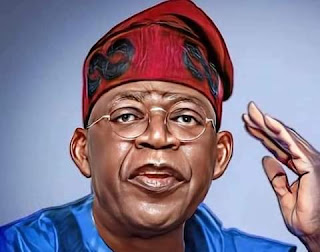
President Bola Ahmed Tinubu has granted a series of high-profile presidential pardons, including posthumous clemency for Nigeria’s nationalist icon Herbert Macaulay, and former military officer Major General Mamman Vatsa, who was executed for treason in 1986.
The sweeping gesture of mercy, endorsed by the National Council of State on Thursday in Abuja, also includes clemency for the Ogoni Nine—activists executed in 1995 under the Abacha regime—as well as several former public officials and inmates.
Historic Pardons for National Figures
Herbert Macaulay, often revered as one of the founding fathers of modern Nigeria, received a symbolic posthumous pardon. Macaulay, who was convicted twice by British colonial authorities—first in 1913 over alleged mismanagement of estate funds while working as a private surveyor—has long been viewed as a victim of politically motivated prosecutions.
Major General Mamman Vatsa, a former Federal Capital Territory Minister during the Babangida regime, was executed following a controversial conviction for an alleged coup plot. A published poet and respected officer, Vatsa’s trial and execution have remained subjects of public debate for decades.
President Tinubu also posthumously pardoned Dr. Nnamdi Azikiwe, a pioneering nationalist and leader of the National Council of Nigeria and the Cameroons (NCNC), further underscoring a national effort to reconcile with the past.
Clemency for Ogoni Activists and Former Officials
In a move widely welcomed by human rights advocates, the President officially pardoned the Ogoni Nine—Ken Saro-Wiwa, Barinem Kiobel, John Kpuinen, and six others—three decades after their execution sparked international outrage. Additionally, four prominent Ogoni leaders—Chief Albert Badey, Chief Edward Kobani, Chief Samuel Orage, and Theophilus Orage—received posthumous national honours.
The Council also approved pardons for several former public officials previously convicted of corruption, including:
Farouk Lawan – Former House of Representatives member;
Anastasia Daniel Nwaobia;
Barrister Hussaini Umar;
Ayinla Saadu Alanamu.
The presidency stated the pardons were granted on grounds of demonstrated remorse and rehabilitation.
Two other individuals—Nweke Francis Chibueze, serving a life sentence for drug trafficking, and Dr. Nwogu Peters, who had served 12 out of a 17-year sentence for fraud—also received clemency.
Prison Reforms and Broader Clemency
Exercising his constitutional powers, President Tinubu granted clemency to 82 inmates across the country, reduced sentences for 65 others, and commuted death sentences for seven inmates to life imprisonment.
The President acted on recommendations submitted by the 12-member Presidential Advisory Committee on the Prerogative of Mercy (PACPM), chaired by Attorney-General and Minister of Justice, Prince Lateef Fagbemi.
The committee’s report presented to the Council of State revealed the following outcomes:
175 inmates were interviewed, with 294 total applications considered;
82 inmates recommended for clemency;
2 inmates recommended for full pardons;
65 inmates approved for sentence reductions;
7 death-row inmates had sentences commuted to life imprisonment;
15 ex-convicts recommended for presidential pardon—11 of them posthumously;
Ogoni Four recommended for national honours.
Criteria for Clemency
The Committee based its recommendations on a variety of humanitarian and legal considerations, including:
Old age (60 years and above);
Terminal illness;
Youth (16 years or younger at the time of conviction);
Good conduct during incarceration;
Vocational rehabilitation and reformation;
Deportation after conviction abroad;
Strong recommendations from correctional authorities.
Reform Agenda
The PACPM was inaugurated by Secretary to the Government of the Federation, Senator George Akume, on January 15, 2025. Its mandate is to support President Tinubu’s broader agenda of promoting justice, human rights, and rehabilitative justice within Nigeria’s correctional system.
The sweeping exercise marks one of the most far-reaching acts of presidential mercy in recent Nigerian history and signals a renewed commitment to national healing and reform.
