
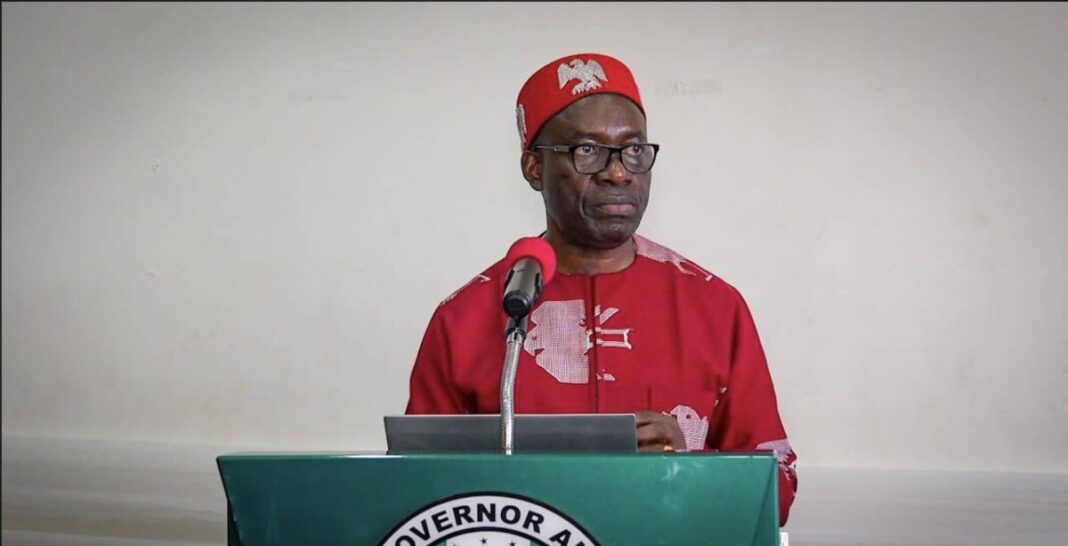
By Chuks Moses, Awka
An overworked, young resident doctor at the Rivers State University Teaching Hospital, RSUTH, Dr. Femi Rotiifah, has died after being on duty for 72-hours non-stop.
His death and plight of other overworked medical staff has taken the centre-stage as health workers in Anambra State get primed to embark on a strike action from Thursday.
The President of the Nigerian Association of Resident Doctors, NARD, Dr. Tope Osundara confirmed the tragedy.
His words: “What happened is that he was on call in the Emergency Room. Afterward, he went to the call room to rest, and it was there that he died. Unfortunately, he was the only one attending to the patient. The overuse of manpower strained his health and led to this painful death. It was a death on duty.”
Elsewhere, health-care delivery across Anambra State faces imminent disruption as nurses, laboratory scientists, pharmacists, and other allied health professionals under the state and local governments prepare to withdraw services starting Wednesday, September 4, 2025.
The planned strike action, announced at a press conference in Awka, is being coordinated by key unions in the state’s organized health sector:
• The National Association of Nigeria Nurses and Midwives (NANNM)
• The Medical and Health Workers Union of Nigeria (MHWUN)
• The Nigerian Union of Allied Health Professionals (NUAHP)
Union leaders say the industrial action is the result of years of unfulfilled promises, delayed entitlements, and government inaction—despite repeated ultimatums and efforts at dialogue.
Frustration Reaches Breaking Point
In a strongly worded letter dated August 19, 2025, and addressed to Governor Chukwuma Charles Soludo, the unions expressed deep disappointment at what they described as the state government’s “silence, neglect, and misrepresentation” of their demands.
They accused some government aides of misleading the Governor by painting a false picture of stability in the health sector, despite the worsening conditions health workers face daily.
“Our plight has been muffled and ignored,” the unions lamented. “We are not asking for special treatment, only for the same entitlements our colleagues enjoy in other states.”
Unless urgent steps are taken, the unions insist, a total strike will commence, shutting down hospitals and health centres across the state and all 21 LGAs.
Demands: Clear, Lawful, and Long Overdue
The unions argue that their demands are neither new nor excessive, but rather reflect federal government-approved standards already implemented in most Nigerian states.
Their core demands include:
• Full implementation of the CONHESS salary structure across state and LGA levels
• Adoption of the revised CONHESS scale with a 25% upward adjustment
• Payment of Rural Posting Allowances
• Enhanced call duty, shift, and hazard allowances
• Internship programs for graduates of Nursing Science and other health disciplines
• Immediate promotion exercises and settlement of promotion arrears in the Health Management Board (HMB) and COOUTH
• Recruitment of new health professionals to address staff shortages
“These are lawful entitlements, not favours,” said a union leader. “Anambra cannot continue to treat health professionals as expendable, especially when other states within our region have moved ahead.”
A Timeline of Broken Promises
Health workers say their grievances have been festering for years, worsened by what they describe as a pattern of official neglect:
• January 6, 2025: First 15-day ultimatum expired; dialogue opened but yielded no action.
• August 1–15, 2025: Second ultimatum met with what the unions called “shallow proposals” from the state.
• August 20, 2025: A final ultimatum gave the government until September 3 to respond.
As of press time, no meaningful action has been taken, leading workers to conclude that the government has left them with no other option but industrial action.
“We Are Not the Only Ones Who Will Suffer”
Union leaders were clear: the strike is not an empty threat.
If no resolution is reached by Tuesday night, health facilities across the state—including emergency, maternal, and outpatient services—will shut down.
“This action will affect not just us, but the entire population—children, mothers, the elderly—who depend on these services. The government must take responsibility,” one representative stated.
Brain Drain and System Collapse
It was learnt that the Anambra’s health sector has been plagued by a steady exodus of skilled workers due to poor pay and harsh conditions.
“Nurses work 24-hour shifts for peanuts. Lab scientists lack basic reagents. Midwives deliver babies without essential tools,” said a senior health official.
The consequence, he noted, is a “system on the brink of collapse”—with patients bearing the brunt.
Government’s Response: “We Have Invested Heavily”
In response, the Anambra State Government issued a statement through the Commissioner for Health, Dr. Afam Obidike, reaffirming its commitment to health workers’ welfare.
The statement read: “The Soludo administration has not neglected health workers. Within two years, we have:
– Constructed and equipped five general hospitals and an ultra-modern trauma centre
– Recruited thousands of new health professionals
– Introduced telemedicine to bridge manpower gaps
– Approved performance-based incentives
– Implemented Grade Level 10 as entry point for Nursing Officers, a long-standing demand
– Commenced salary harmonization discussions based on economic realities”
Dr. Obidike also noted that another 1,000 health workers will be recruited shortly, and that Governor Soludo is the first governor since the state’s creation to prioritize large-scale recruitment and infrastructure expansion in the health sector.
Call for Dialogue Over Strike
While acknowledging the unions’ right to agitate for better welfare, the government urged workers to reconsider the planned strike, describing it as counterproductive and harmful to patients.
“The government remains open to dialogue,” Dr. Obidike said. “We believe constructive engagement, not industrial action, is the best way forward.”
But the Health professionals insist that the crisis can still be averted—if the state government acts swiftly and decisively.
They urge:
• Immediate implementation of approved salary structures
• Settlement of outstanding arrears and promotions
• Recruitment of needed manpower
• Transparency and honest communication from government officials
“This is about the survival of healthcare in Anambra,” one union representative said. “We have whispered, we have pleaded, we have waited. Now we raise our voices—for ourselves, and for every citizen who needs care.”
As the September 4 deadline arrived, all eyes are on the Anambra State Government. With public health on the line, union leaders insist that only urgent action can prevent a full-scale healthcare crisis.
“The choice is no longer ours,” they said. “It lies with Governor Soludo and his administration. Let no one say they were not warned.”
