
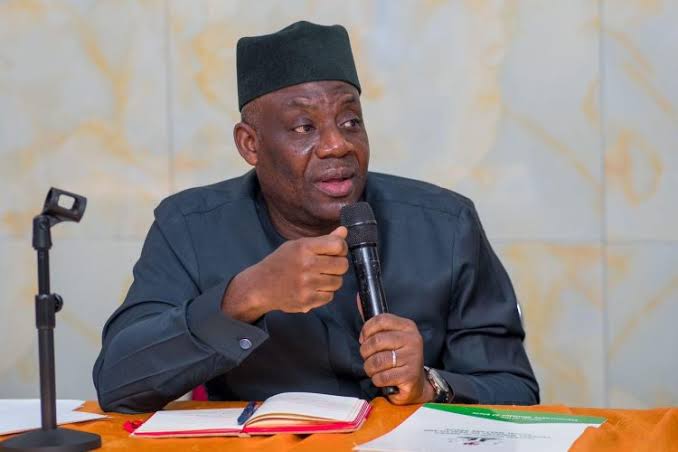
The Federal Government has unveiled startling statistics to justify the recent ban on the establishment of new universities, polytechnics, and colleges of education across the country. The decision, announced by the Minister of Education, Dr. Tunji Alausa, follows the Federal Executive Council (FEC)’s approval of a seven-year moratorium on the creation of additional federal tertiary institutions.
Speaking after the FEC meeting presided over by President Bola Tinubu at the Presidential Villa, Abuja, Dr. Alausa said the move is aimed at improving the quality and sustainability of tertiary education in Nigeria.
“The data is shocking,” he stated. “There are currently 199 universities in Nigeria, yet fewer than 99 candidates applied to some of them. Alarmingly, 34 universities received zero applications through JAMB.”
He further revealed similar trends across polytechnics and colleges of education:
Out of 295 polytechnics (federal, state, and private), less than 99 candidates applied to many.
Of 219 colleges of education, 64 received no applications at all via JAMB.
“These figures show a clear disconnect between the proliferation of institutions and actual demand,” he said. “This moratorium is necessary if we’re to halt the decline in quality and preserve global respect for Nigerian graduates.”
Dr. Alausa attributed the current decay in the system to unregulated expansion, which has led to duplication, reduced institutional capacity, and a deterioration of both infrastructure and manpower.
“If we fail to act now, our tertiary education system risks further decline, potentially rendering our graduates less competitive and employable globally,” he warned.
According to the Minister, Nigeria currently has:
72 federal universities
108 state universities
159 private universities
Similar patterns of oversupply and underutilisation exist across polytechnics and colleges of education. He cited the case of a university in the North with fewer than 800 students but more than 1,200 staff members—an unsustainable ratio, he noted.
Dr. Alausa described the moratorium as a bold, corrective measure by the Tinubu administration. He said the government will now shift its focus to strengthening existing institutions through improved infrastructure, expanded capacity, and enhanced manpower.
“Our priority is to increase the carrying capacity and quality of current institutions to ensure Nigerian graduates continue to earn global respect,” he affirmed.
Despite the moratorium on federal institutions, the Council approved the establishment of nine new private universities. These approvals, the Minister explained, came from a backlog of 79 pending applications—some delayed for over six years due to inefficiencies within the National Universities Commission (NUC).
“Many of these private investors have already built campuses and invested billions. The delays were due to bureaucratic inefficiencies, which we have now reformed. Today’s approvals are part of efforts to clear that backlog,” Dr. Alausa stated.
