
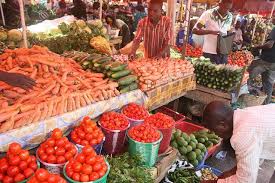
Food price continue to rise in June though annual inflation drop
Food prices in Nigeria rose in June 2025, with month-on-month food inflation climbing to 3.25%, up from 2.19% in May, according to the National Bureau of Statistics (NBS). This increase comes despite a sharp drop in the year-on-year food inflation rate to 21.97%—a significant decline of 18.93 percentage points from the 40.87% recorded in June 2024.
The monthly increase was driven by higher average prices of key staples and perishables, including dried green peas, fresh pepper, white dried shrimps, crayfish, fresh meat, tomatoes, ground pepper, and plantain flour. The 1.07 percentage point climb from May underscores the continued pressure on household food budgets.
The sharp annual decline in food inflation is largely due to a change in the base year for inflation calculation, now set at 2024. Without this technical adjustment, the underlying inflation trend would appear more persistent.
On a broader scale, the average annual food inflation rate for the 12 months ending in June 2025 stood at 28.28%, down from 35.30% a year earlier—a 7.02 percentage point improvement.
However, overall inflation trends remained mixed. The Consumer Price Index (CPI) rose from 121.4 in May to 123.4 in June, reflecting rising prices across various goods and services. Headline inflation, which includes food and non-food items, eased slightly year-on-year to 22.22% in June, down from 22.97% in May. Yet, on a month-on-month basis, headline inflation rose to 1.68%, up from 1.53%, indicating continued price increases, albeit at a slower annual rate.
Urban areas faced steeper inflationary pressures, with monthly urban inflation rising to 2.11% in June from 1.40% in May. Conversely, rural inflation slowed to 0.63%, down from 1.83%. Year-on-year, urban inflation was 22.72%, while rural inflation stood at 20.85%.
Core inflation—excluding volatile agricultural and energy prices—also accelerated, reaching 2.46% month-on-month in June, up from 1.10% in May. Annually, however, core inflation eased to 22.76%, down from 27.4% in June 2024.
At the state level, Borno (31.63%), Abuja (26.79%), and Benue (25.91%) recorded the highest year-on-year headline inflation, while Zamfara (9.90%), Yobe (13.51%), and Sokoto (15.78%) saw the lowest. Monthly headline inflation was most pronounced in Ekiti (5.39%), Delta (5.15%), and Lagos (5.13%), while Zamfara (-6.89%), Niger (-5.35%), and Plateau (-4.01%) recorded sharp declines.
Food inflation also varied significantly across states. Borno (47.40%), Ebonyi (30.62%), and Bayelsa (28.64%) had the highest year-on-year rates, while Katsina (6.21%), Adamawa (10.90%), and Sokoto (15.25%) had the lowest. Month-on-month, Enugu (11.90%), Kwara (9.97%), and Rivers (9.88%) experienced the highest increases, while Borno (-7.63%), Sokoto (-6.43%), and Bayelsa (-6.34%) saw food prices decline.
The NBS cautioned that variations in state-level inflation are influenced by differences in consumption habits and the weighting of items in the inflation basket, making direct comparisons potentially misleading.
While the headline and annual food inflation figures indicate some moderation, the continued rise in monthly food and core inflation suggests that inflationary pressures remain persistent—particularly impacting lower-income households already burdened by rising living costs.
