
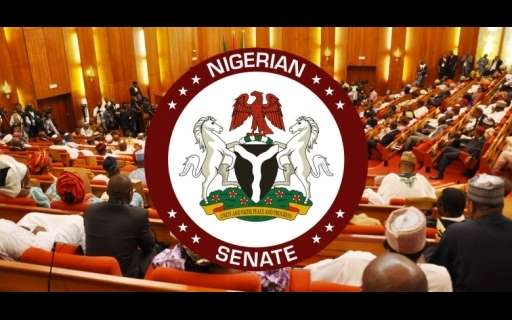
Tensions reached a boiling point in the Nigerian Senate on Tuesday as lawmakers clashed over the Executive’s persistent failure to implement the ₦9.995 trillion capital component of the 2024 national budget. The uproar came just moments before the Senate passed a controversial extension, pushing the capital spending deadline from June 30 to December 31, 2025—the second such extension in under a year.
But observers suspect the uproar may have come about because many constituency projects and other inserted ones, which would have benefitted lawmakers politically and personally, were left unexecuted. One said: “That is the koko (main reason) for the anger. 2027 election machinations have begun and they have nothing to pursue it with. Notice the PDP lawmakers spearheaded this while those from the ruling party conveniently allowed them…read between the lines. It is a game and somebody chose to be away to conduct affairs.”
In a stormy plenary session following the Sallah recess, senators returned to find themselves caught between legislative oversight and executive demands. Senator Solomon Olamilekan Adeola, Chairman of the Senate Committee on Appropriations, led the push for the extension, arguing that the measure was critical to completing thousands of stalled infrastructure projects across the country.
“There is a need for further extension for the funds to be fully and judiciously expended,” Adeola said.
But not all lawmakers agreed. For many, the move signaled a collapse of fiscal discipline and a betrayal of the Nigerian people.
“This isn’t a delay anymore—it’s outright sabotage,” declared Senator Abba Moro (PDP, Benue South). Senator Seriake Dickson (PDP, Bayelsa West) went further, accusing the Executive of abandoning the capital budget—the portion meant to impact everyday Nigerians—while fully executing recurrent spending. “Where did the money go?” he asked pointedly.
Senator Abdul Ningi (PDP, Bauchi Central) called for a full-scale investigation, even suggesting that President Bola Tinubu be summoned to explain the state of the 2024 budget. “Enough is enough. We are being taken for a ride,” Ningi said.
As momentum built for a probe, Deputy Senate President Jibrin Barau abruptly halted proceedings and blocked a vote on the investigation. Instead, he referred the matter to Senate committees—prompting accusations of a deliberate cover-up.
“Even though we are not where we should be, things are planned in the interest of the country,” Barau insisted, facing audible disapproval from his colleagues.
Despite the uproar, the Senate passed the amendment to the 2024 Appropriation Act in a fast-tracked process—first, second, and third readings were completed in a single session. A similar bill also passed second reading in the House of Representatives, championed by Deputy Majority Leader Ibrahim Abdullahi Halims.
A Pattern of Delay: Budget Extensions Under Tinubu
This latest extension marks the third time under President Tinubu’s administration that a capital budget implementation timeline has been extended. The first came at the end of 2023, when the President asked the National Assembly to shift the 2023 budget’s capital spending deadline from December 31 to March 31, 2024. That was followed by a second extension to June 30, and a third to December 31, 2024.
In December 2024, as the 2025 Appropriation Bill was being presented, Tinubu once again sought an extension for the 2024 budget, citing the need to complete ongoing capital projects. That deadline was set to expire this week—until Tuesday’s extension pushed it to the end of 2025.
The result? Two federal budgets—the 2024 and 2025 Appropriation Acts—are now running concurrently, raising serious questions about fiscal coherence and capacity for execution.
Critics Warn of Governance Breakdown
Civil society organizations and economic experts are raising alarms. The Network for the Actualization of Social Growth and Viable Development (NEFGAD) criticized the National Assembly for eroding its oversight role, calling the continued extension of the 2024 budget “unconstitutional, deceptive, and dangerous.”
“A budget is not a vague promise—it is a legal, time-bound financial plan,” said Akingunola Omoniyi, the group’s Country Head. “Extending it well into the next fiscal year undermines accountability and constitutional order.”
Economist Dr. Paul Alaje echoed the concerns, warning that the government may resort to additional borrowing to fund overlapping budgets. “There’s no revenue base to support this extension. We are likely looking at more debt and inflation,” he said.
Another expert, Dr. Marcel Okeke, said that extending last year’s budget under drastically different economic conditions distorts macroeconomic planning. “It’s arbitrary and harmful. The oil prices, inflation rates, and currency values that informed the 2024 budget are no longer valid,” he stated.
Legal Perspectives: Extension Not Illegal, But Problematic
While critics argue the extension is unconstitutional, legal experts maintain that the National Assembly is within its rights. Senior Advocate of Nigeria Dayo Akinlaja said, “There is no legal barrier to such an extension. The legislative authority lies squarely with the National Assembly.”
Still, another SAN, Adedayo Adedeji, cautioned that while technically legal, the practice violates the spirit of fiscal discipline outlined in the Fiscal Responsibility Act. “Budgets are ideally implemented within a fiscal year. Constant extensions weaken budgetary credibility,” he said.
Conclusion: Oversight or Overreach?
The battle over the 2024 budget’s capital spending highlights deeper systemic challenges: poor project execution, lack of transparency in disbursements, and increasing reliance on debt. With only six months left before the 2026 budget must be submitted, analysts warn that Nigeria’s fiscal calendar is drifting into dangerous territory.
Whether the latest extension delivers value for money—or becomes another footnote in a growing record of unfulfilled budget promises—remains to be seen. What is clear, however, is that the Senate’s failure to hold the Executive accountable may cost Nigeria far more than time.
● Additional reporting by Daily Trust.
